Why the lots open at dawn
Gates swing back hours before kickoff because everything about a serious tailgate is a function of time — and there is never quite enough of it.
The clock starts early for a reason
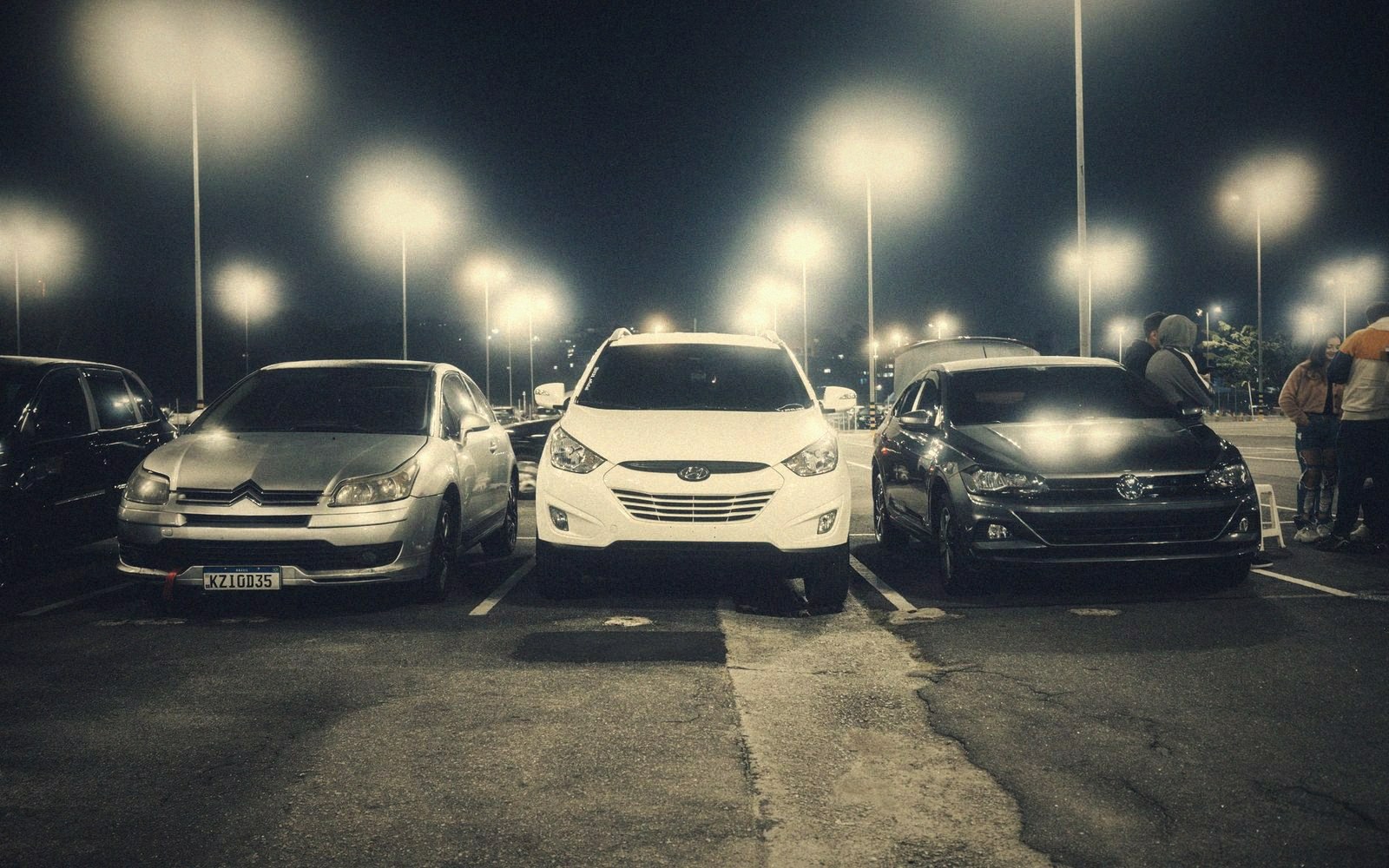
Six hours sounds generous until you actually use them. The lot gate opens at dawn or close to it — often six or seven hours before kickoff — and that window disappears faster than anyone new to the ritual expects. Tents go up, tables unfold, grills are positioned and lit, coolers are staged, and the kitchen, such as it is, gets organized before the first guest arrives. None of that is quick when you are working off a truck bed on asphalt in the dark, and the person who arrives two hours after you has already lost the best spots, the most favorable shade angle, and any realistic chance of having hot food ready before the walk to the stadium.
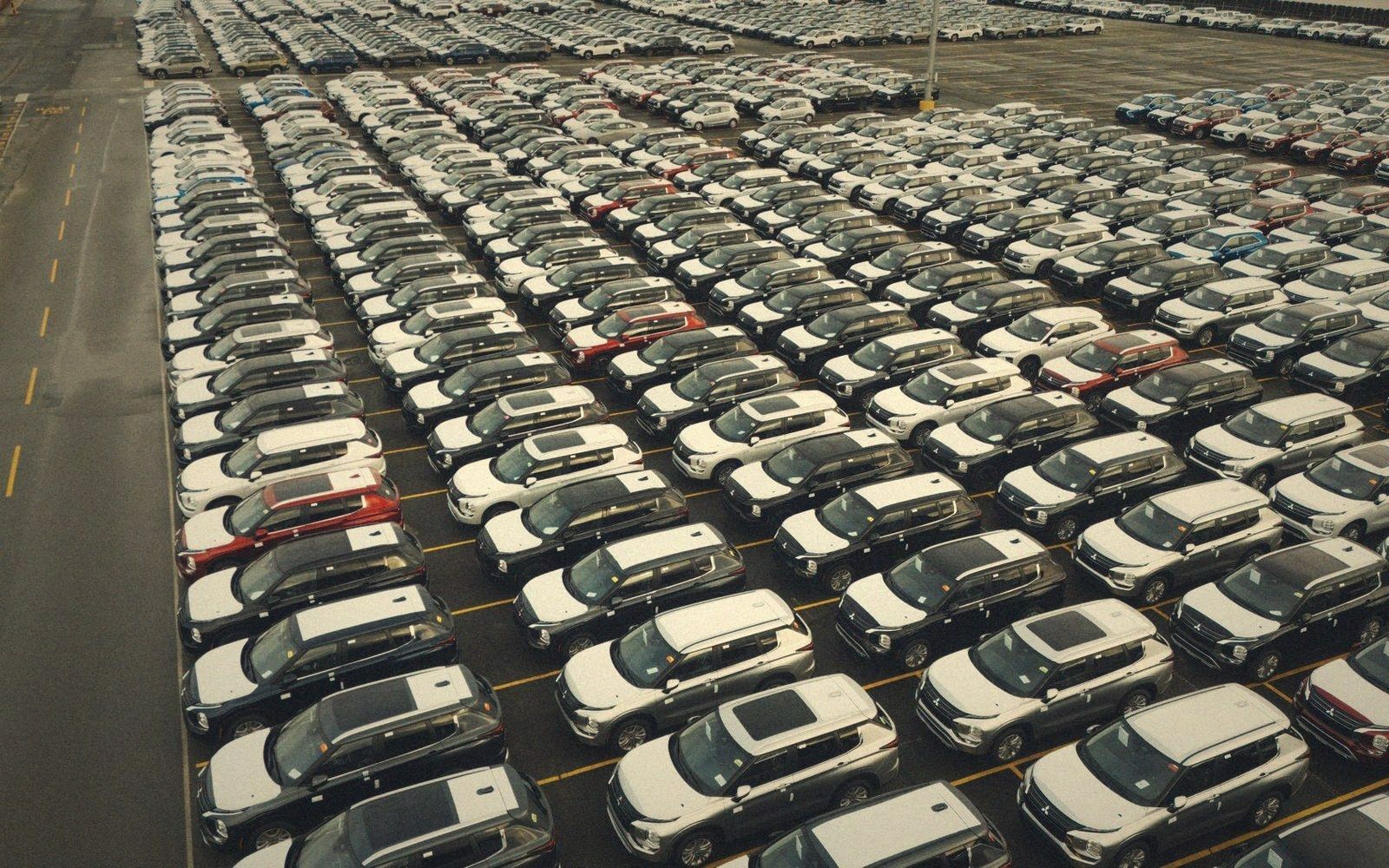
The timing is also partly a matter of civic management. Parking lots hold thousands of vehicles, and the university or stadium authority needs people to disperse into the full acreage of available space rather than pile up at a single entrance. Early opening distributes the crowd. It also gives law enforcement, facilities staff, and the small army of shuttle drivers and tram operators time to position before the mass arrival hits. The gate time is set by the host institution, not by informal tradition, and it moves — home openers, rivalry games, and televised night kickoffs each carry their own schedule, sometimes released only days before.
But logistics only explain when the gates open. They do not explain why people walk through them the moment they do. That answer is simpler and more human: the tailgate itself is the event. The game is what happens after.
What six hours actually contains
A well-run setup follows something close to an internal schedule, even if nobody writes it down. The first hour is entirely physical — staking a claim, leveling equipment, getting fire going. A charcoal chimney takes twenty minutes to reach cooking temperature; a propane setup is faster but still requires assembly and a safety check. Nothing eats into that first hour except the work itself.
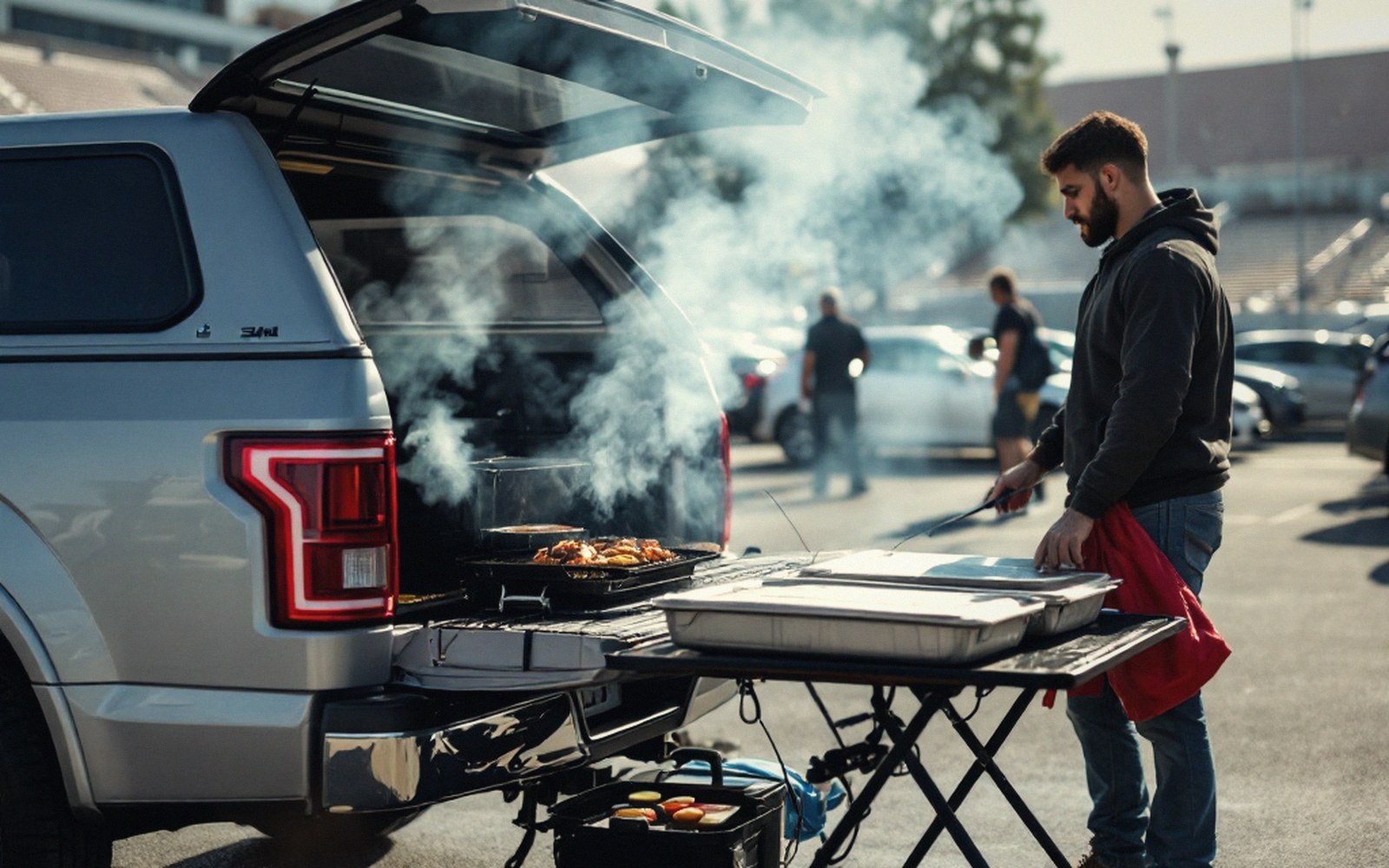
Cooking follows, and the math of cooking outdoors at scale means that holding without power becomes the central discipline of the day almost immediately. If kickoff is at noon, anything that needs to be hot and ready at ten-thirty has to come off the grill before nine. Which means it goes on around eight. Which means the fire has to be right by seven-thirty. Which means — and here is where new tailgaters underestimate the requirement — you need to be in the lot, setup complete, by seven at the latest. Six is better. Five-thirty is not unusual for a group with serious cooking ambitions and a large headcount.
The shape of a long tailgate day
- Gates open six to seven hours before kickoff; time set by the institution, not tradition
- Hour 1 setup only: tents, grills lit, coolers staged; no time for anything else
- Hours 2–3 cooking window; food going on the grill well before it needs to be served
- Hours 3–5 social core; peak population, music, band passes through the lot
- Hour 5–6 controlled wind-down; food safety decisions made, equipment secured
- Final push group moves to stadium in waves; skeleton crew stays with the setup
The middle stretch, roughly hours three through five, is the social heart of the day. Food is either ready or close; the lot has filled; neighbors have introduced themselves or at least made eye contact over the fence of their designated space. Music is running. The marching band has probably done its first pass through the lots — a phalanx of brass and percussion that seems to compress the air around it, moving at a cadence that makes everyone within earshot stand slightly straighter. This is the period that converts skeptics. People who came only for the game find themselves still at the table an hour after they expected to leave for the gates.
The final hour before gate-open at the stadium is a controlled dismantlement. Anything perishable that has been held warm for hours gets evaluated against a firm standard — the rule is conventional and unambiguous, and the question of what to bin is settled by elapsed time, not by how the food looks or smells. Coolers get consolidated. Grills cool under supervision. What remains on the table is shelf-stable: chips, bread, anything that travels back to the vehicle without risk. The group moves to the stadium in waves, usually leaving one or two people behind to watch the setup, depending on how much equipment was left out and how much the neighborhood is trusted.
The hidden architecture of the morning
None of this looks organized from the outside, and that is partly what makes it fascinating to watch. Thousands of individual groups, each running their own kitchen, their own guest list, their own rough schedule, somehow produce a coherent event. The lot has social norms that nobody legislates: the generator goes downwind of the neighbors, or you will hear about it; the space between setups is respected because everyone needs it; music stays at a volume that competes without dominating.
The early hours have their own quieter texture. Before eight, the lots feel like a working kitchen — purposeful, a little tense, short on ceremony. The people here are the committed ones. They know which side of the tent catches morning sun and have already adjusted the canopy. They have a system for the coolers that goes back years. The equipment is worn in the way that serious cooking equipment gets worn — discolored, dented in particular places, bearing the marks of exactly this kind of use. Watching a veteran group set up is like watching a stage crew: everything has a place and a sequence, and the whole operation takes about a third of the time it would take someone trying it for the first time.
What surprises first-timers
- Scale — major programs spread across hundreds of acres, zoned by group type
- Noise — volume and density are not conveyed by television coverage
- Earliness — committed groups arrive before the sun is fully up
- How much is cooking, not waiting — the lot is a working kitchen, not a pregame lounge
By ten, the character of the lot shifts. Later arrivals bring more energy and less planning. Smaller setups — a folding table, a single cooler, a portable speaker — appear in the remaining gaps. First-timers navigate the rows with that specific expression of people who have seen something on television and are now realizing it is louder, larger and more tightly packed than any broadcast conveyed. The lots are genuinely impressive at scale. A major program's footprint can extend across hundreds of acres, with dedicated zones for students, alumni, donor groups, and the general public, each with its own atmosphere. The whole thing is a town that doubles its population for a single Saturday, and the lots are where that second population lives its day.
What the long opening window really provides is depth. A two-hour tailgate is a meal. A six-hour tailgate is a whole day — with weather, with neighbors, with the slow build of anticipation that the game itself sometimes fails to match. The people who leave the lot most reluctantly are not usually the ones who care least about football. They are the ones who have understood the ritual most completely: that the parking lot is not the waiting room for the stadium. It is the venue. The game is the encore.