A Town That Doubles
Six Saturdays a year, a small city absorbs a second population equal to its own — and every public system quietly bends under the weight.
The Numbers That Change Everything
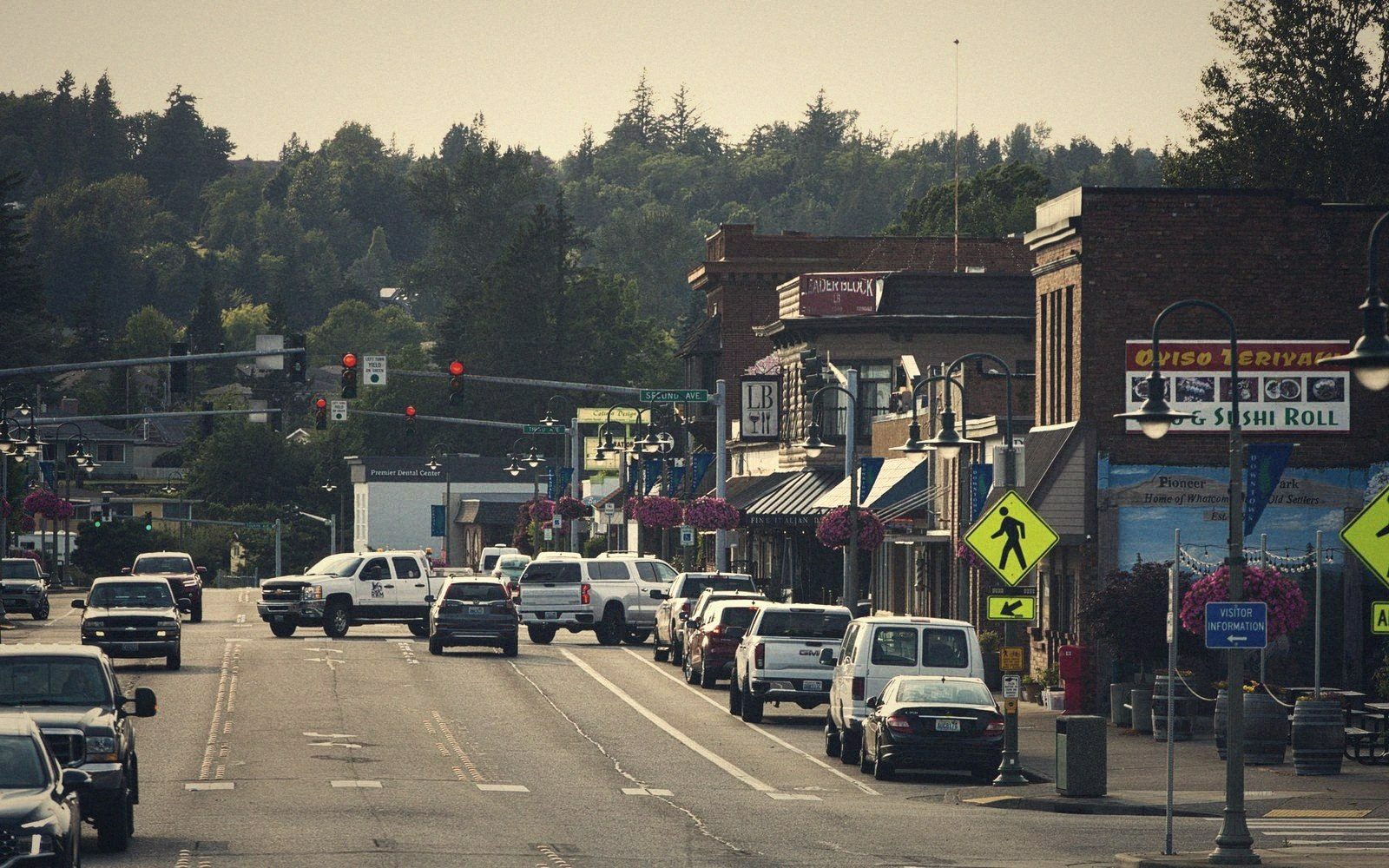
Most college football programs sit in mid-sized or genuinely small cities — places whose permanent populations run anywhere from thirty thousand to a hundred and twenty thousand people. On a home Saturday, that number roughly doubles. The arrivals do not trickle in; they compress into a window of four or five hours, stressing infrastructure designed for an ordinary Tuesday. Water towers draw down faster than usual. Cell towers saturate. Intersections that handle morning rush without a second thought back up for miles in every direction.
City engineers and university operations teams spend months before the season modeling these loads. Water pressure in neighborhoods adjacent to the stadium can drop noticeably during peak demand — a product of tens of thousands of people using portable facilities and stadium plumbing simultaneously. The power grid rarely fails outright, but utility companies quietly pre-position crews because the draw from the stadium's lights, video boards and concession equipment, combined with the load from tens of thousands of phone chargers and portable generators across the surrounding lots, is not trivial.
Policing scales in a way that is visible even to a casual visitor. Officers are pulled from days off, neighboring jurisdictions send mutual-aid personnel, and state troopers manage the highway corridors. The coordination happens at a unified command level that the city would normally reserve for a declared emergency. For the staff involved, that is not a dramatic comparison — it is just an accurate one.
What the Town Itself Provides
The commercial districts around a college stadium run on a model that the economics of six Saturdays makes plain: revenue that would require months to accumulate under normal conditions arrives in a weekend. Restaurants open at seven in the morning when they would ordinarily not unlock before eleven. Parking lots that sit unused on weekdays become the primary income of whoever holds the lease on a piece of flat asphalt within walking distance of the gates. Hardware stores sell bags of ice by the pallet. Gas stations run out of it by mid-morning.
The hotel picture is starker. Properties within a reasonable drive book out for home weekends sometimes a year in advance, with rates that reflect pure demand. Fans who have not secured a room close to campus end up forty or fifty miles out, adding a logistical layer to a day that is already long. The surrounding towns — smaller still — develop their own informal economies around the overflow: church parking lots rented for tailgating, front yards opened up for ten dollars a car.
What strains first
- Water pressure drops in adjacent neighborhoods during peak demand
- Cell towers saturate fastest, often within the first hour of lot opening
- Road corridors inbound compression into a four-to-five-hour window; outbound spike after the final whistle
- Policing unified command structure, mutual-aid agreements, state highway patrol involvement
Residents who have no interest in football become involuntary participants. Their streets fill with strangers, their neighborhood parking disappears and their Saturday errands become exercises in patience. Most long-term residents develop a pragmatic relationship with it. Some leave for the weekend. A few have made the calculated decision that what the event does for local tax revenue, restaurant survival and hotel occupancy is worth six disrupted Saturdays — a conclusion that is easier to hold at a distance than from the end of a blocked driveway.
After the Crowd Leaves
The departure is abrupt. Within two hours of the final whistle, the population spike inverts — not a slow diffusion but a mass movement, mostly vehicular, that re-stresses every road corridor that the arrivals used. Highway on-ramps queue. Gas stations run out of fuel a second time. The cleanup the city faces the following morning is substantial: waste management crews work through Sunday, and the volume they handle is a direct index of how little crowd management alone can do about it.
What is left behind, beyond the litter, is something the permanent population lives with all week: a slight economic afterglow, a city services invoice, and the knowledge that five more Saturdays are already on the calendar. The university does not own the city's water system or its roads or its police department, but the event the university hosts shapes all of them, for a day, completely. The arrangement has the character of a compact that nobody formally signed — the city provides the infrastructure, the university provides the crowd, and the two sides have been negotiating the terms, mostly in good faith, for as long as there has been football.

The economic shape of the day
- Hotel rooms — booked a year out at peak-demand rates
- Surrounding towns — church lots, front yards, informal overflow parking economies
- Commercial districts — open hours earlier than normal, ice and fuel run out by mid-morning
- Revenue concentration — income that takes months ordinarily compressed into one weekend