Power in the lot
Most setups have none. That single fact shapes every other decision you make.
The baseline is zero
Parking lots do not come with electrical outlets. The occasional premium or hospitality zone may offer a hookup, but for the vast majority of tailgaters, the lot is an off-grid environment from the moment they pull in to the moment they drive out. This is not a special inconvenience — it is the default condition, and experienced crews treat it as a given rather than a problem to be solved at the last minute.
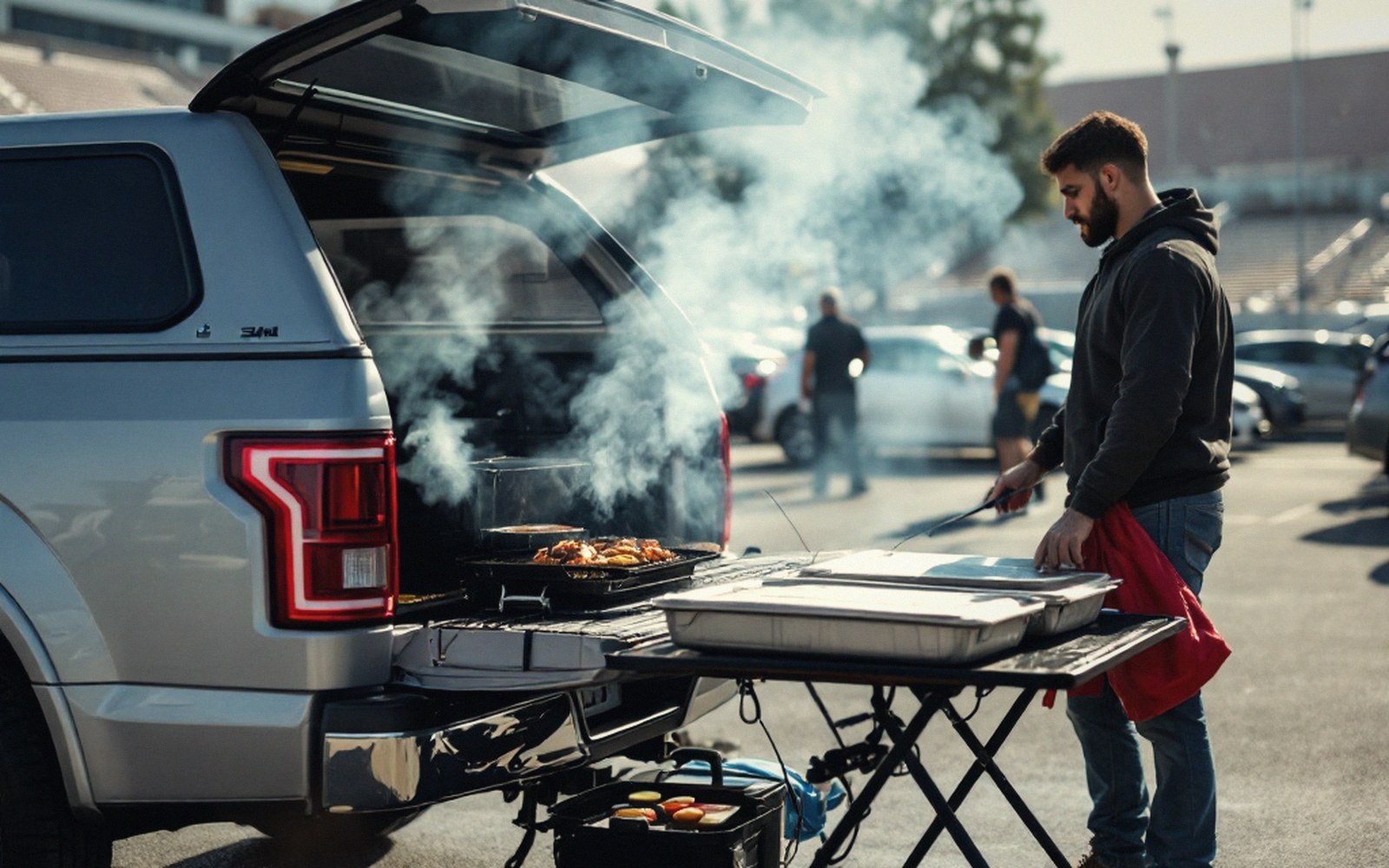
The practical consequence runs through the whole day. Anything that needs a heating element, a refrigeration compressor, or a fan drawing continuous current is simply off the table. That rules out the electric griddle you use at home, the plug-in warming tray, and the countertop roaster. What remains is fire: propane burners, charcoal grills, and the residual heat you can trap inside an insulated box. Holding without power is not a workaround — it is the actual method.
Cold storage works the same way. Ice in a well-managed cooler is the only refrigeration most setups will ever have. That makes ice a finite resource to be spent carefully rather than a commodity to burn through, and it makes pre-chilling everything before you leave home the single most effective preparation you can do. A cooler opened to cool warm drinks is already failing.
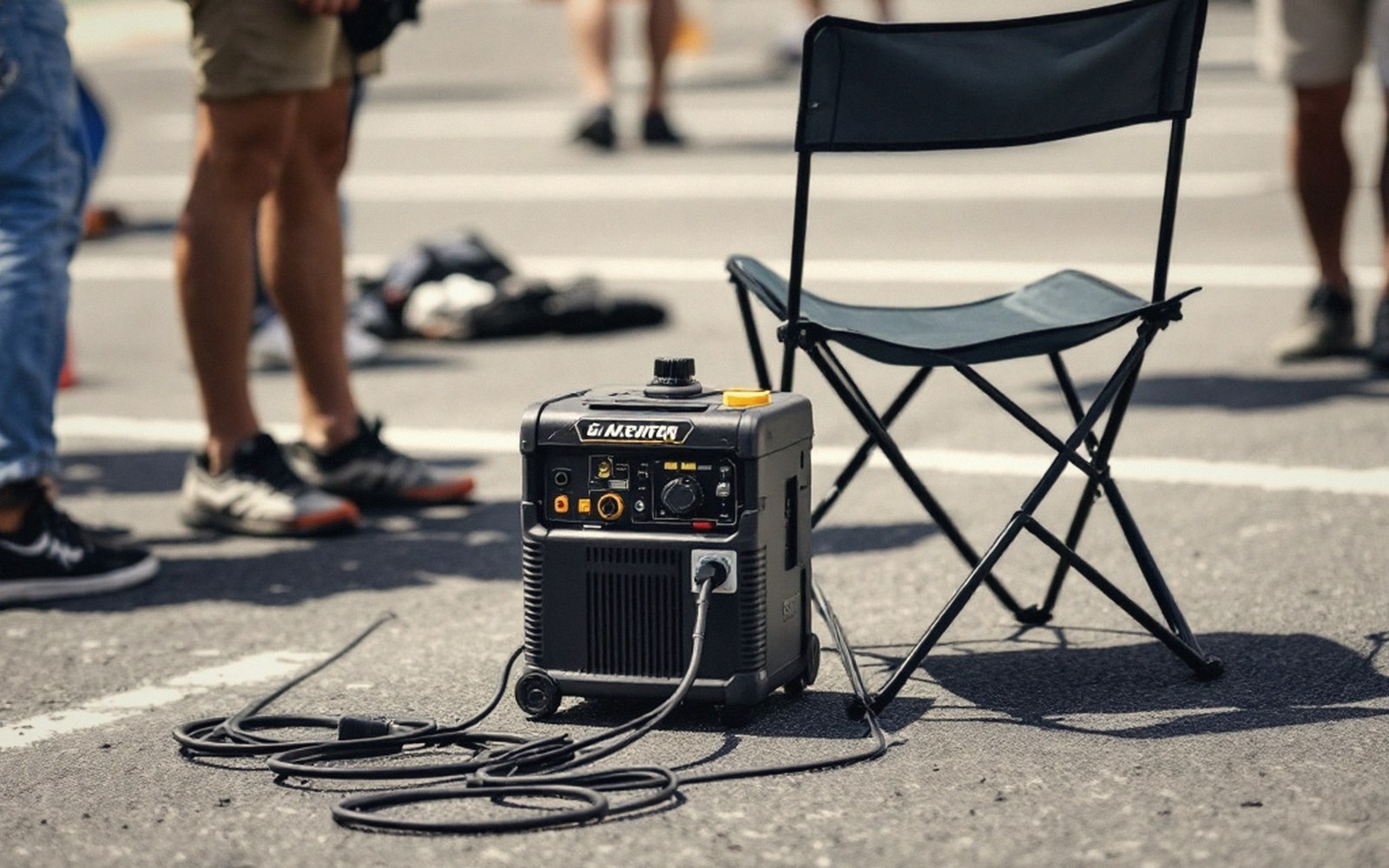
Some crews run a small portable power station — a lithium battery pack — for a phone charger, a Bluetooth speaker, or a single LED strip under the canopy once the light drops. These are genuinely useful in that narrow role. They cannot run a compressor cooler or a heating appliance for any meaningful stretch, and anyone who shows up expecting otherwise will learn quickly.
The constraint and the responses
- Off-grid baseline the default condition in a standard parking lot; no outlets, no hookups
- Propane and charcoal the primary heat sources when mains power is absent
- Insulated cooler with ice the only cold storage available to most setups
The deeper point is that off-grid cooking forces discipline that actually makes for better food: fewer dishes, better timing, and a menu planned around what travels and reheats well rather than what requires constant electricity to stay safe. Crews that have done this for years do not miss the outlet. They designed around it so long ago that the design feels natural — which, by now, it is.
Also worth knowing
- Portable power station (battery pack) — useful for low-draw devices only; cannot run compressors or heating appliances
- Pre-chilling — compensates for ice that cannot do cooling work on arrival