What Travels and What Does Not
Some dishes survive the journey from kitchen to lot; others collapse the moment they leave the stove. The difference is worth knowing before you load the truck.
The Assets
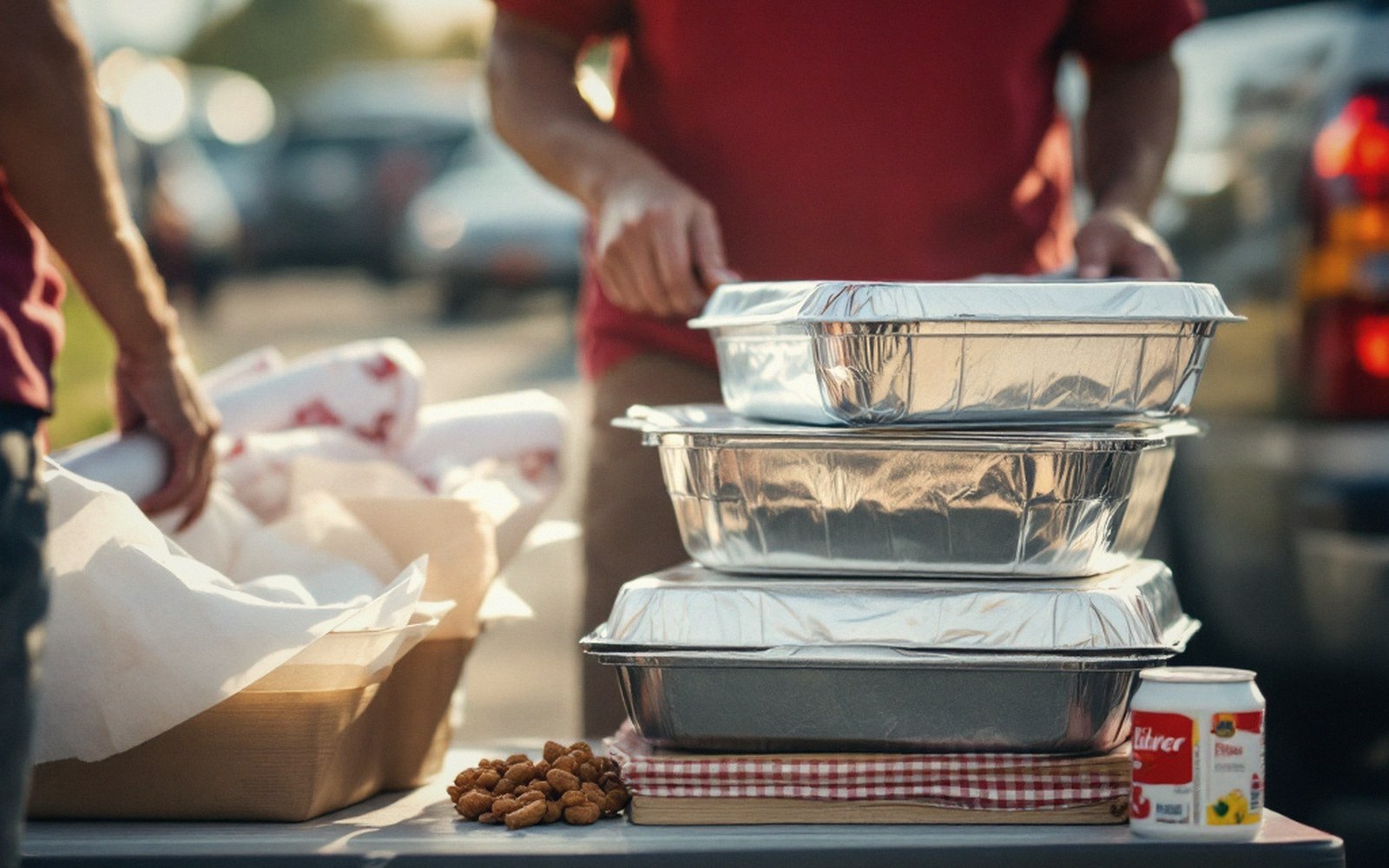
Think of travel as another cooking variable — like heat or time — and you can start to see which dishes actually benefit from it. Braises are the clearest example. A pile of pork shoulder or beef chuck that has been cooked low and slow, pulled, and packed into a foil pan while still steaming will sit for two hours wrapped in towels and emerge better than it went in: juicier, more cohesive, easier to serve. The carry-over heat finishes the collagen. The resting time lets the proteins relax. A dish you would barely touch for thirty minutes on a home counter becomes your most reliable asset across a four-hour lot setup.
Dry-rubbed ribs travel similarly well. They lose a little bark if they steam in a covered pan, but the alternative — arriving with cold ribs — is worse. The fix is simple: rest them loosely covered for the first hour, then seal them down once the surface sets. Chili, baked beans, and any bean-based side are functionally immune to the problem. They hold temperature well in volume, they do not deteriorate texturally, and reheating on a burner takes minutes. One pot for twenty is specifically built around this logic: a single large, forgiving dish beats several smaller ones that each need individual attention.
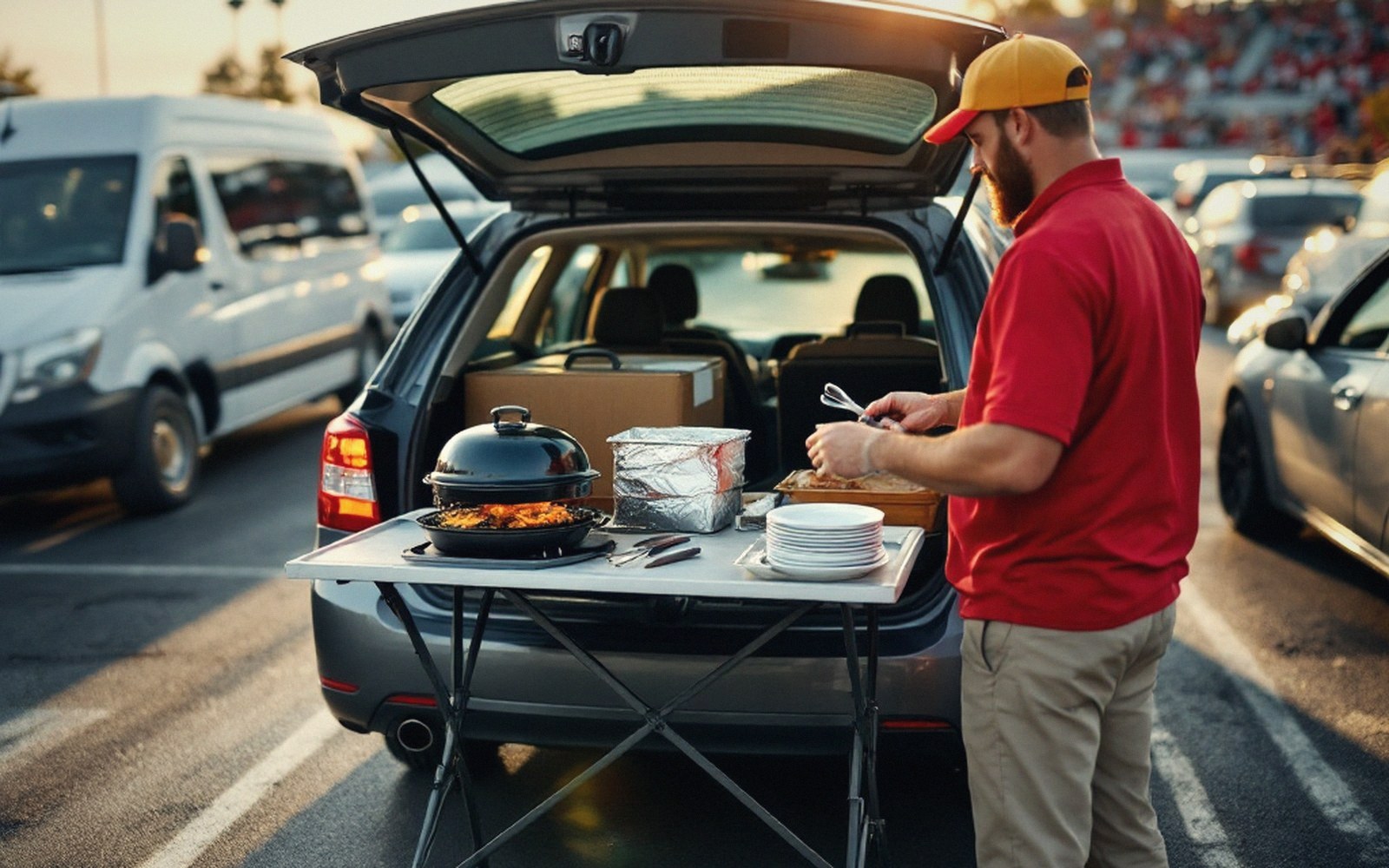
Room-temperature dishes are the other category of asset, and they are underused. A slaw dressed an hour before serving is often better than one dressed to order — the cabbage softens slightly and absorbs the seasoning. A corn salad, a black bean and pepper mix, a vinaigrette potato salad held cold and brought up to ambient: these do not need heat management at all. That frees the burners and the carving board for the things that genuinely need them.
The Risks
Anything that must be served at a precise temperature and declines rapidly below it is a risk. Burgers are the most common example — they are also one of the most common menu choices, which is part of why lot cooking is harder than it looks. A burger cooked and held for twenty minutes in a covered pan becomes a steamed hockey puck. The solution most experienced cooks land on is to stage the cook: grill in two or three rounds rather than all at once, matched to the pace people are actually eating. That requires someone managing the grill continuously, which has its own cost. If your group needs the cook freed up for other things, burgers are the wrong choice.
Anything with a crust faces the same problem. Fried chicken arrives soft. Grilled sausages are fine if you accept they will look braised rather than charred, but chicken pieces with skin, quesadillas, anything that depends on surface texture — these do not travel. They can be finished on a lot grill, but only if the grill is already lit, already hot, and you have planned for the extra time.
Dish categories at a glance
- Assets (travel well) braises, pulled meats, chili, baked beans, bean sides, dressed slaws, room-temperature salads
- Risks (need careful staging or should be dropped) burgers (grilled to order), anything with a crust, fried items, egg-based dishes, anything requiring simultaneous precise temp and texture
Eggs are a separate category of risk for a different reason: food-safety holds are shorter and the window of error is narrower. Anything based on soft scrambled eggs, any egg-based sauce, any dish that relies on protein just set — these are not lot food. The same logic applies to anything held warm that you cannot confidently say reached and stayed at a safe internal temperature throughout the journey. Cold food, and what to bin covers the rule plainly: when in doubt, it goes.
The Practical Divide
Before you finalise a menu, run each dish through two questions. First: does this dish need to arrive at a precise temperature and texture simultaneously? If yes, it is a risk. Second: does time and gentle heat actually help this dish? If yes, it is an asset. Most menus that work well on a lot end up with one hero dish from the asset category — something brewed or braised — and two or three more assets: a forgiving side, a cold salad, bread that needs no heating at all. The cook's job then becomes keeping the hero hot, which holding without power addresses directly, rather than trying to rescue four things at once.
The lot does not punish ambition. It punishes the wrong kind.
The two planning questions
- Does this dish need to arrive at a precise temperature and texture simultaneously? → Risk
- Does time and gentle heat actually improve this dish? → Asset