Cooking off One Vehicle
The kit you are willing to carry is the kitchen you actually have
A tailgate kitchen is not designed from scratch — it is whatever survives the packing stage. Everything must load in, travel at highway speed, survive the lot, run without mains power, and pack away dirty afterward. That five-part test eliminates most of what a domestic kitchen contains. What remains defines your menu, which is why experienced cooks settle the equipment question first and the recipe question second.
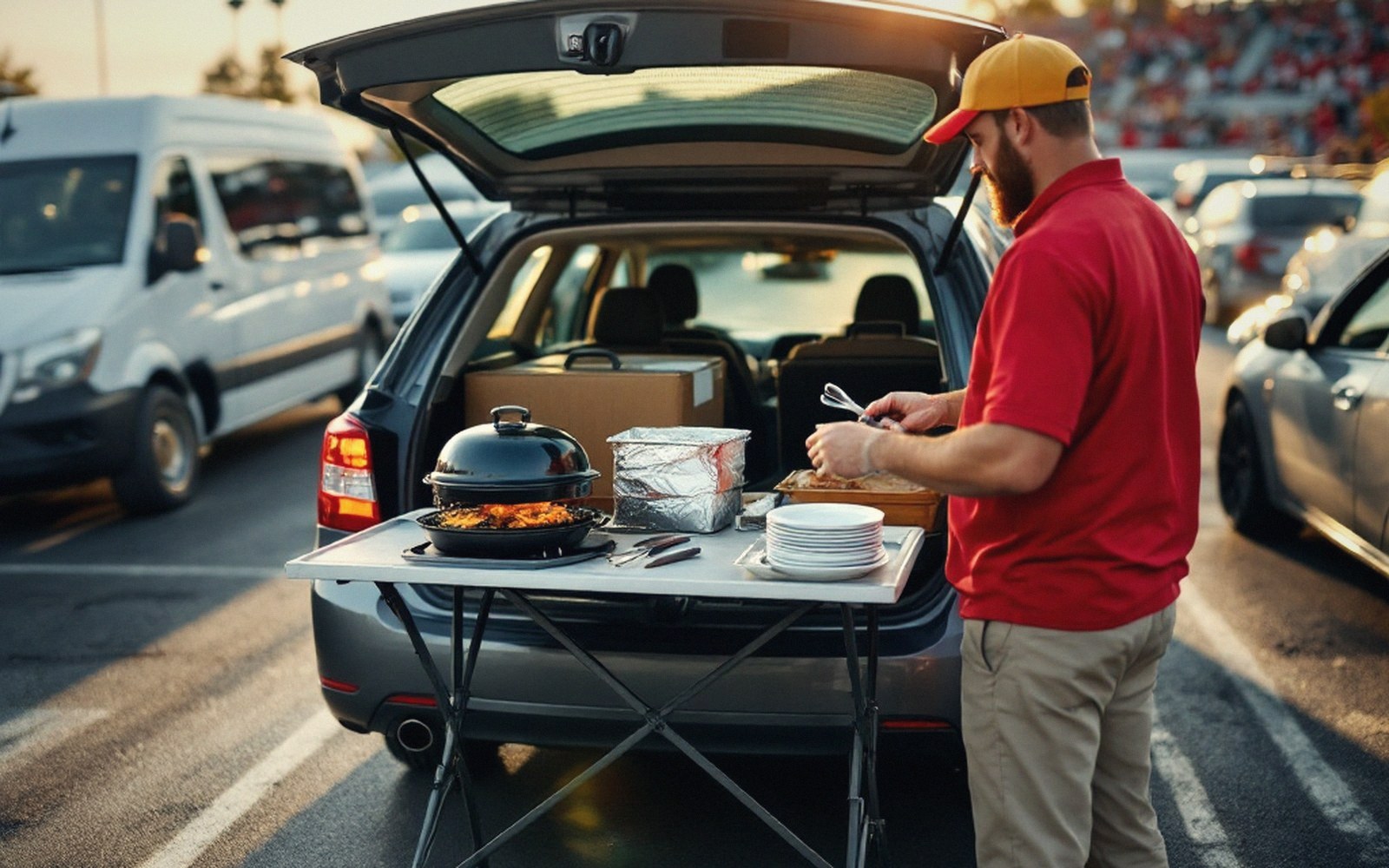
The vehicle itself sets the first constraint. A pickup bed is a generous staging platform: flat, contained, at a comfortable working height if you drop the tailgate and stand behind it. An SUV offers the same working surface only if you have cleared and lined the cargo area — useful, but a narrower platform. A sedan means everything comes out and sits on a folding table or, in a pinch, a cooler lid. Whatever the vehicle, the tailgate drop or equivalent surface becomes the prep station, the pass, and the pack-down zone all at once. Keep it uncluttered and you can work cleanly; let it become a dumping ground and the cook spends the whole morning rummaging.
Fuel-burning equipment must ride secured, upright, and — for propane tanks — with valves shut. This is not optional caution; it is the rule most lots enforce and the one that matters before anything culinary does. A single burner on a propane cylinder is more versatile than most people expect: it handles a deep pot, a cast-iron pan, or a griddle flat, and it sets up and breaks down in under a minute. Two burners, whether on one unit or as two separate singles, let you run a protein and a side simultaneously without coordination gymnastics. Beyond two burners the logistics of refueling, transporting, and balancing things on asphalt start to outrun the benefit. The grill — charcoal or gas — is a separate station, not a substitute for a burner; it does one thing (radiant heat from below) and requires its own clearance from the vehicle and from foot traffic. Where the grill goes relative to everybody else is decided before any food goes on it, not after.
Prep work done at home is the single biggest multiplier in this kitchen. Anything that can be chopped, measured, marinated, or partially cooked indoors should be. A zip bag of pre-measured spice mix, onions already diced, proteins already cut to portion size — each of these removes a task that would otherwise compete for the one flat surface you have. Think of it as pre-loading the kitchen. What travels and what does not is the prep-day question, and the answer always favors dry or cold over liquid and raw.
How the vehicle type changes the setup
- Pickup (tailgate down) natural prep surface at standing height; bed contains spills and loose gear
- SUV (cargo area cleared and lined) narrower platform; good if the gate opens wide and lies flat
- Sedan or hatchback no built-in surface; folding table or cooler lid becomes the prep station; everything extra must be planned for
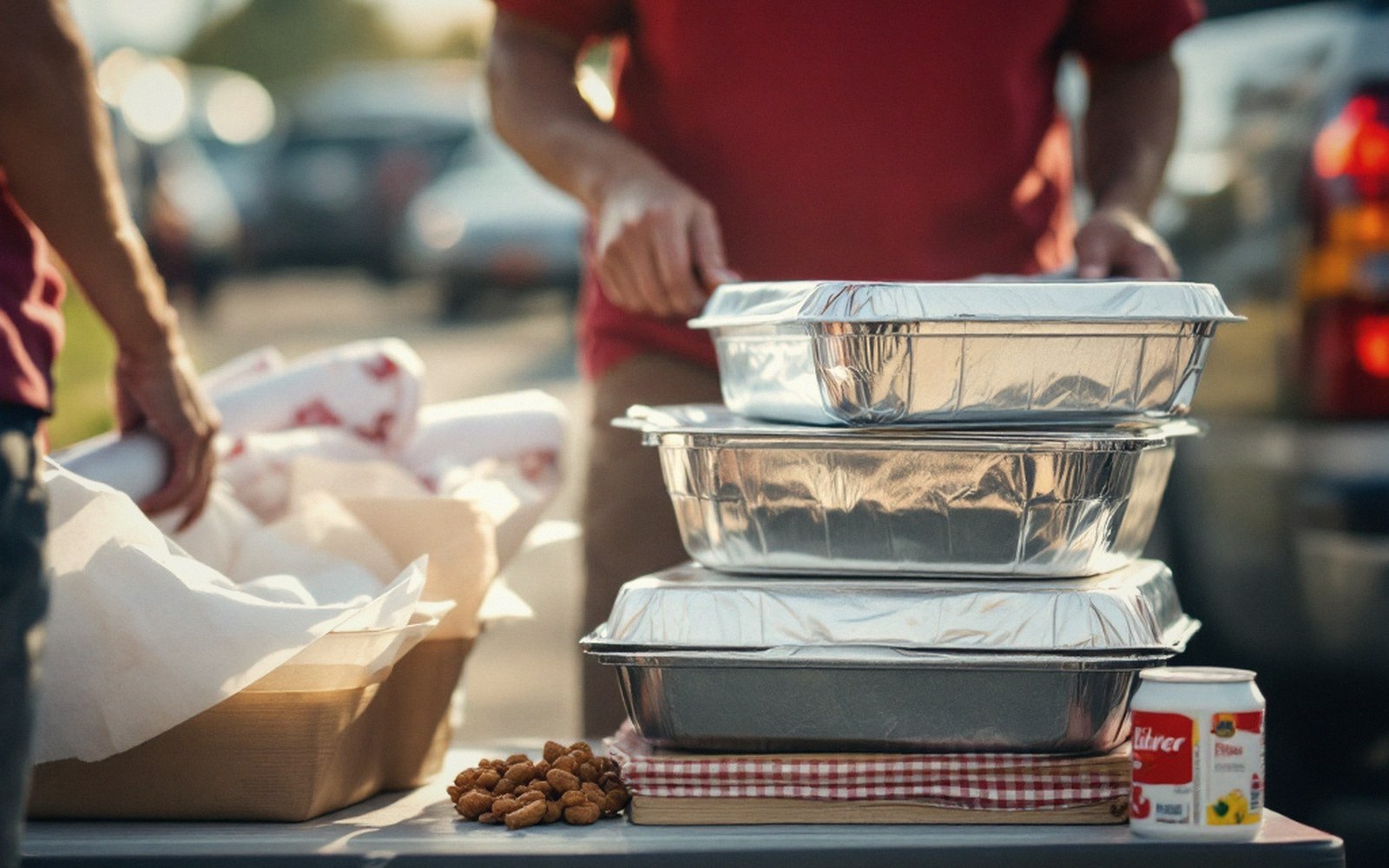
Tools sort themselves quickly under field conditions. A long-handled tongs and a sturdy spatula are genuinely indispensable. A single large cutting board, clamped or weighted so it does not migrate, is a workspace. A roll of foil doubles as a lid, a resting wrap, and a heat diffuser. Paper towels are a cleaning station. Everything else — the mandoline, the squeeze bottles, the offset spatula — earns its seat in the vehicle by proving it does something the essentials cannot. If it doesn't, leave it. Space and weight are finite, and pack-down is easier without equipment that contributed nothing.
Asphalt is an uneven, dirty surface that gets hot by midday. Anything that touches it is effectively compromised, which means every piece of equipment that might tip should be stabilized before cooking starts — burner legs leveled with a shim if needed, grill positioned on a flat patch, coolers weighted or against the vehicle. A single spilled pot on a crowded lot is the end of that meal and possibly the start of a much worse problem. Think of the surface as actively uncooperative and plan accordingly.
Pack-down dirty is the unglamorous final constraint. Pots and pans go into a lined bag or a dedicated dirty bin; you are not washing anything in the lot. Equipment that is hard to transport greasy — a large cast-iron on a hot day — should be wiped, lidded, and bagged. The vehicle that brought a clean kitchen leaves carrying a used one, and the packing sequence for the return trip should be thought out before anyone starts cooking. Cooking off one vehicle is entirely workable. Treating it like a home kitchen is what makes it hard.
Staging sequence (before the first flame)
- Position vehicle, drop tailgate, lay cutting board — establish the prep zone
- Locate and set burners — level on asphalt, away from vehicle edges
- Confirm grill placement — clearance from vehicle, downwind of the group
- Stage coolers within arm's reach but never directly at the cooking station
- Put dirty bin in position before cooking starts, not after