Ice is a budget
You start with a fixed supply and spend it down all day. Every decision about what goes in the box, and every lid you lift, is a withdrawal.
Spend it before you arrive
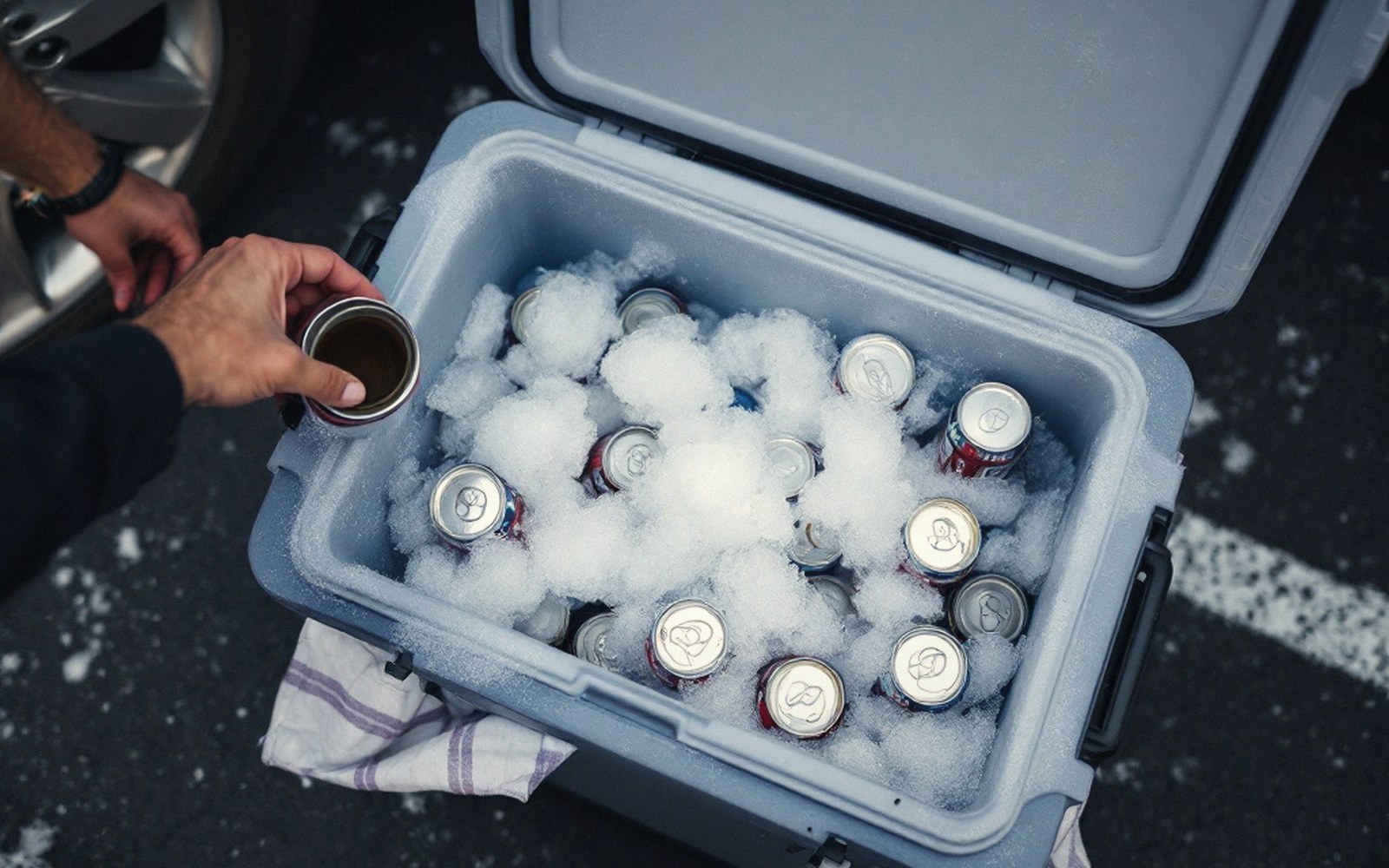
The single most important ice decision happens at home, not in the lot. Anything you put into a warm cooler with room-temperature contents is ice bought for cooling, not for keeping — and those are expensive degrees. Pre-chill everything you can: the box itself, the drinks, the food. Run the cooler in the garage overnight if you need to. What survives the drive should be cold already; the ice's only job from that point is to hold the temperature that already exists, not to create one from scratch.
The same logic applies to the ice itself. Block ice melts slower than cubed because it presents less surface area to the warm air that rushes in every time a lid opens. Cubed ice packs around bottles more efficiently and chills canned drinks faster on arrival. Most people use a mix: a foundation layer of block for thermal mass, cubed ice to fill the voids and surround the contents. If you are buying from a gas station on the way, buy more than you think you need. You will not regret the extra bag; you will regret shorting yourself by noon.
The two-box rule and where it saves you
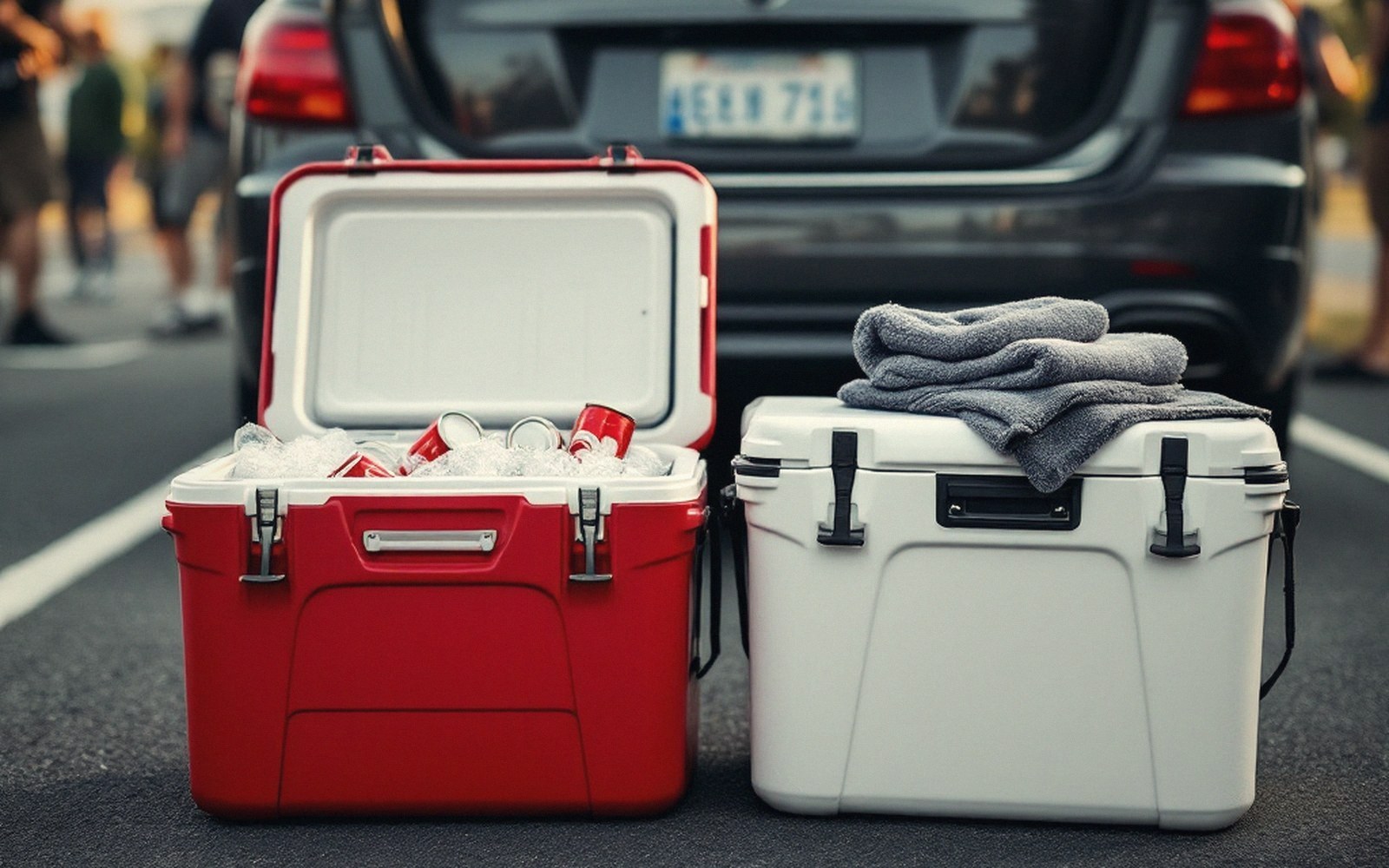
A drinks cooler and a food cooler are not a luxury — they are a different kind of budget management. Drinks get opened constantly, often by people who are not your immediate group, which means that lid is coming off a dozen times an hour. Every opening lets warm air in and cold air out. If your food shares that box, it is suffering every single one of those withdrawals. Keep the two separate and the food cooler might be opened six times across a full day. That is the difference between a box that is still genuinely cold at kick-off and one that has quietly climbed into the danger zone without anyone noticing.
Position matters almost as much as separation. A cooler sitting on hot asphalt in direct sun is fighting a battle on two fronts. Get it off the ground — a folding table, a wheel well, a camp chair, anything — and keep it in whatever shade exists. The lot orients its shade toward midday, and a box left in open sun from ten o'clock onward is losing its budget faster than anything you are putting in or taking out of it. If you are thinking about where to position your entire setup, shade at noon governs this decision more than you might expect.
How ice works against heat — the mechanics
- Block vs. cubed block melts slower (less surface area), cubed chills faster and fills voids; most experienced setups use both
- Pre-chilling a warm cooler spends ice on cooling, not holding; everything goes in cold
- Ground contact and sun exposure asphalt radiates heat upward; direct sun compounds it; elevation and shade are free insulation
- Lid discipline each opening introduces warm air; recovery time is real and cumulative
Counting withdrawals
There is a useful discipline in thinking of the lid as a transaction. Before you open the box, know what you are taking. Do not open it to look, close it, and open it again thirty seconds later. Designate one person as the keeper of the food cooler if your group is large enough that random access becomes a problem — not as a social rule but as a cold-management one. A cooler opened ten times in an hour recovers slowly between openings; one opened twice holds its temperature almost indefinitely.
At the end of the day, the ice budget tells you what you did right and what you did wrong. A food cooler that still has solid block ice in it when you leave the space after the game is a cooler that was managed well — and food held in that condition is food you can trust. A cooler that has gone to slush by the second quarter, full of tepid water and floating labels, is a warning about what was in it. Cold food held warm carries a real risk, and ice that ran out early is usually the reason.
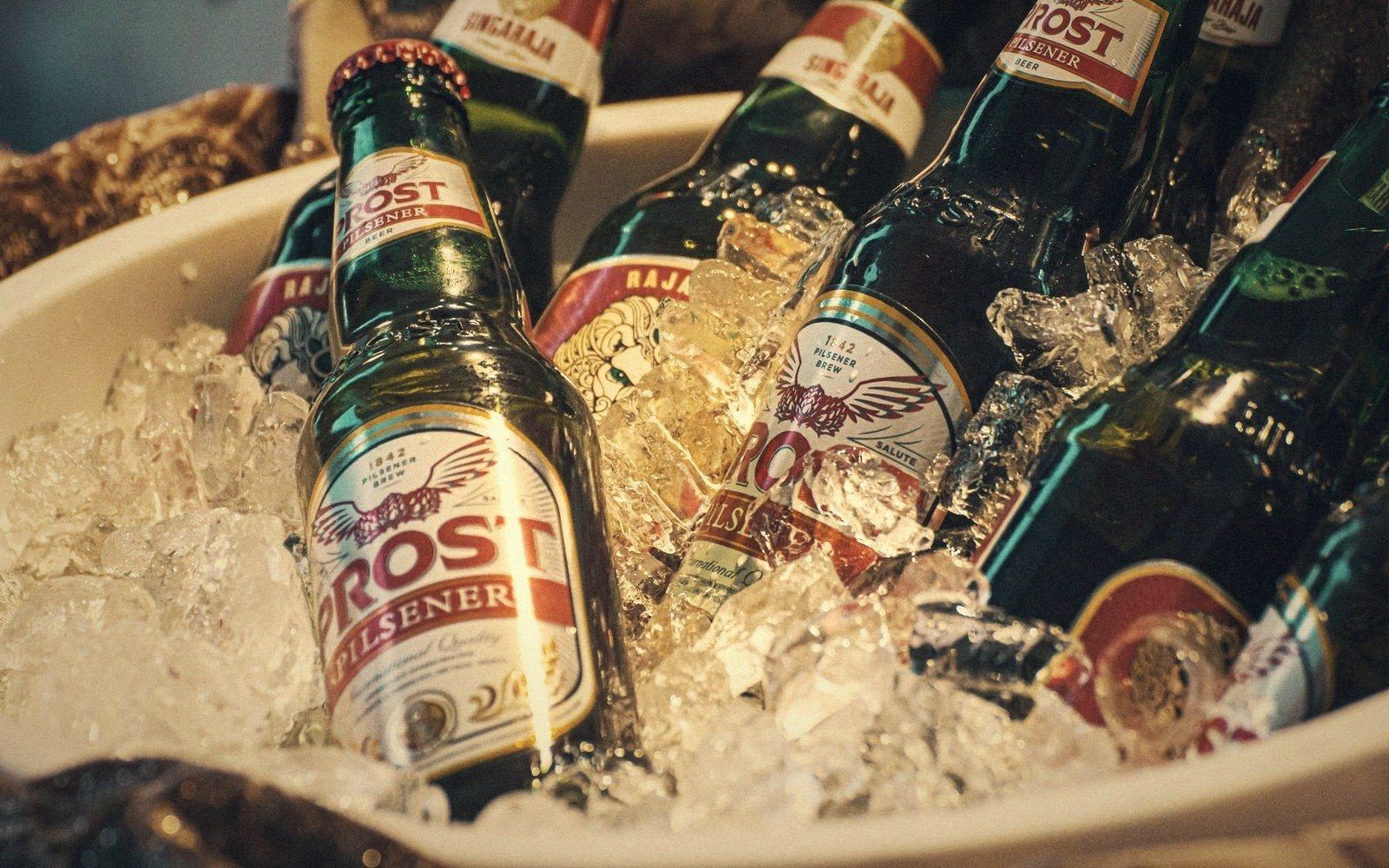
The budget framing is not metaphor for its own sake. It changes behaviour. When you think of each lid-lift as spending something finite, you open the box with intention. You fill it correctly the night before. You position it to spend as slowly as possible. And you come home knowing exactly where the day's cold went.
The two-box logic at a glance
- Drinks cooler — opened constantly, by many people; thermal damage is unavoidable; accept it and protect the food box from it
- Food cooler — opened as few as six times in a full day if managed; holds temperature far more reliably
- End-of-day check — residual block ice in the food cooler = food held safely; full slush = audit what was in it