Two coolers, not one
The single box that holds everything is convenient to pack and expensive to run.
Keep the lids separate
A drinks cooler gets opened constantly — every twenty minutes, sometimes more, across a six-hour setup. Each lid-lift admits warm air and dumps cold air. Run that cycle all day on a box that also holds raw meat or marinated chicken thighs, and you have turned your food safety margin into confetti.
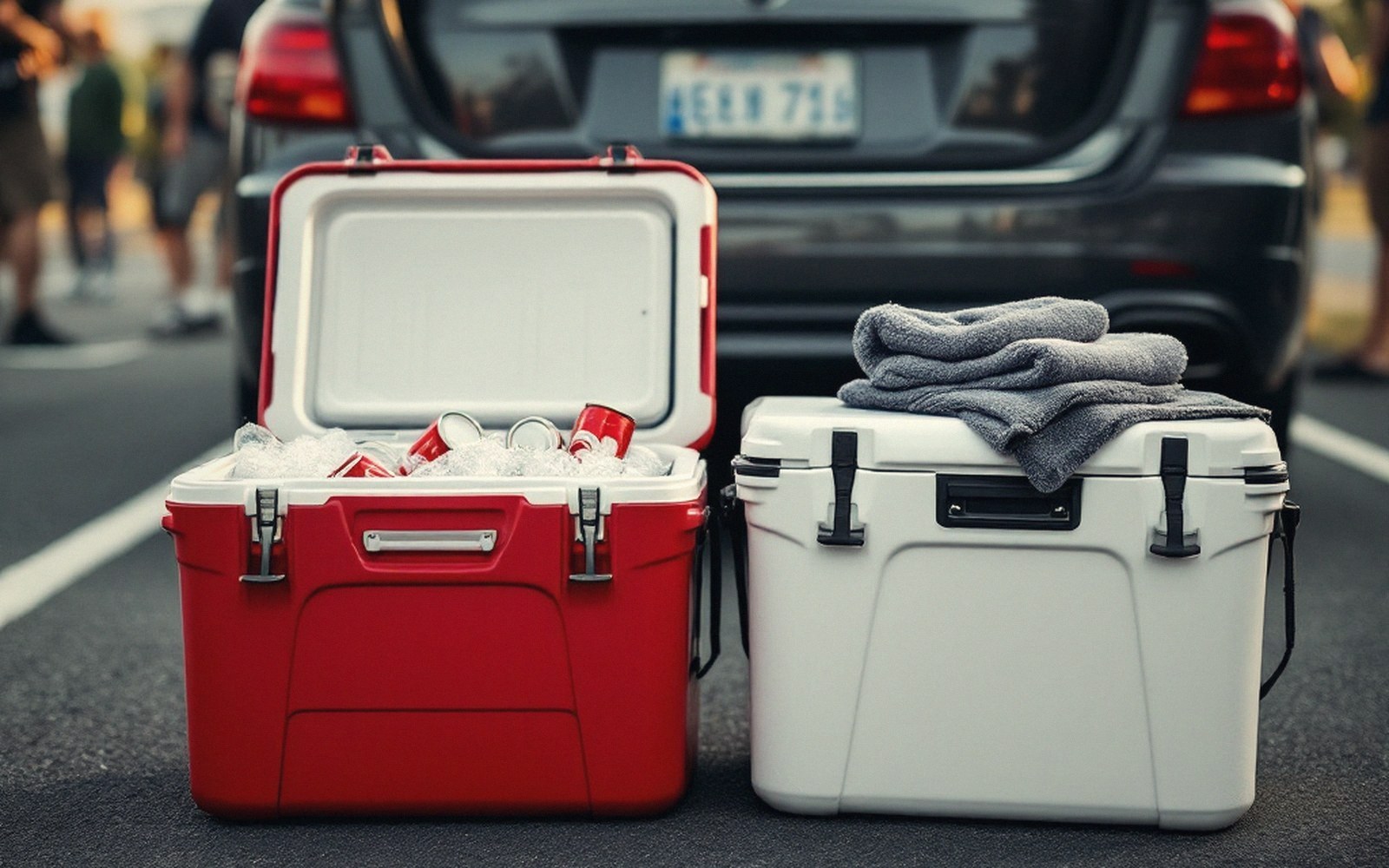
The fix is structural, not disciplinary: two coolers with two jobs. One box is for drinks and takes all the abuse. The other is for food and stays closed until service.
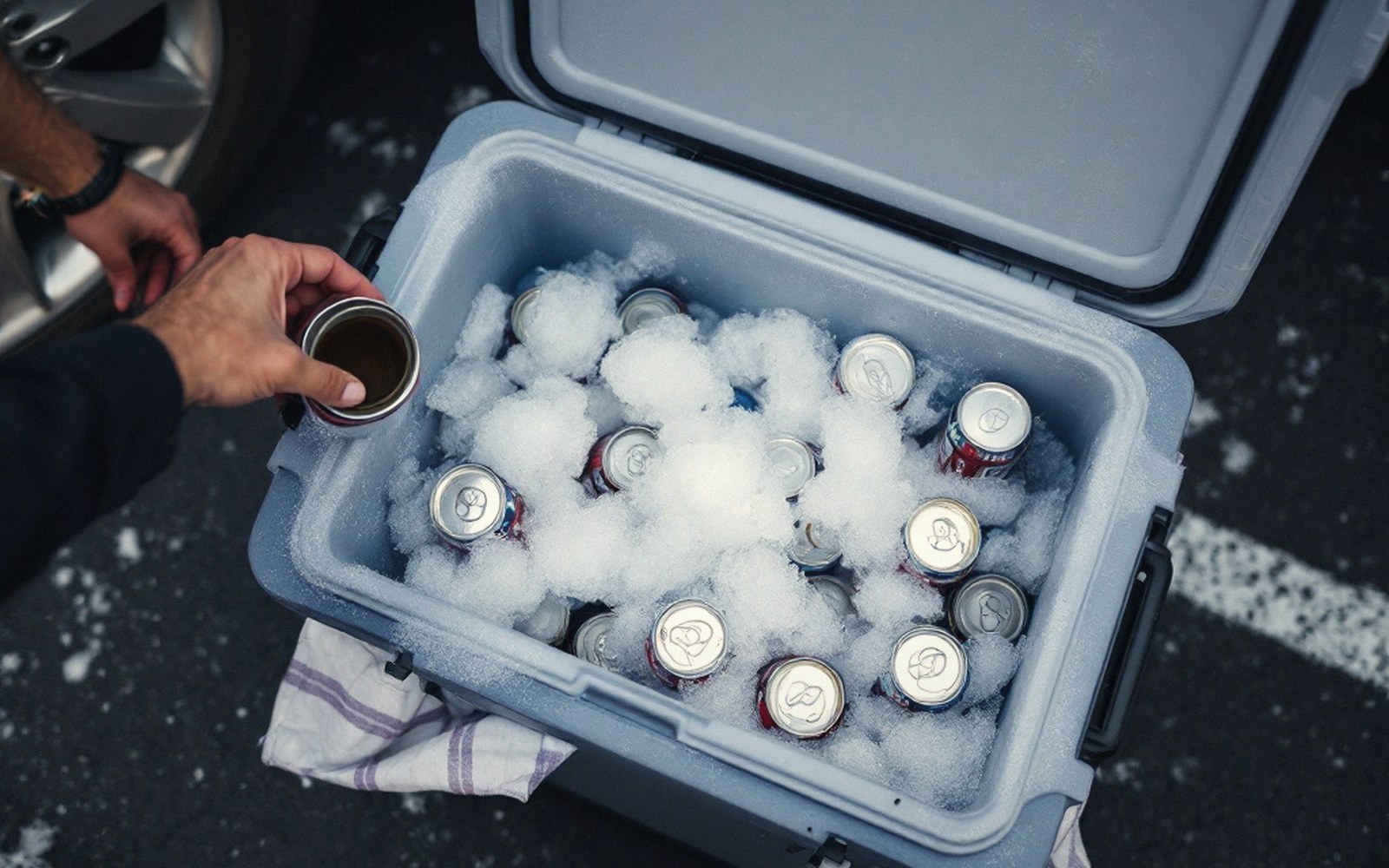
The drinks cooler can be packed loosely, raided freely and left in partial shade without much consequence. The food cooler is a different object entirely. It gets pre-chilled the night before, loaded cold, buried under a blanket or a second layer of ice on top, and opened as few times as the cook demands. Because ice is a budget — a fixed quantity you spend down across the day — protecting the food box means rationing its openings, not buying more ice.
This separation also keeps flavours honest. Drinks condensation, fruit, beer and whatever else goes into the open box cannot contaminate sealed food containers it never touches. Cross-contamination is easier to prevent than to explain.
The core rule
- Drinks cooler opened freely, packed loosely, positioned at the social edge of the setup
- Food cooler opened rarely, pre-chilled, kept near the grill and out of casual reach
Placement matters too. The drinks cooler lives at the edge of the setup, near the point where people naturally gather, so reaching in doesn't mean threading through the cooking area. The food cooler sits back, closer to the grill — accessible to the cook, out of casual reach for everyone else. That geography enforces the rule without anyone having to say anything.
The two-cooler system costs one extra box and pays back in cold food at service, ice that lasts to the final whistle, and a lot less second-guessing about whether anything has been sitting in the warmth too long. The logic is simple enough that it survives a six-hour Saturday and a parking lot that hits ninety degrees by noon.