Leaving the Space
The lot has no landlord on Saturday, but it enforces its own standard — and the person doing the enforcing is the tailgater next to you.
The Unwritten Contract
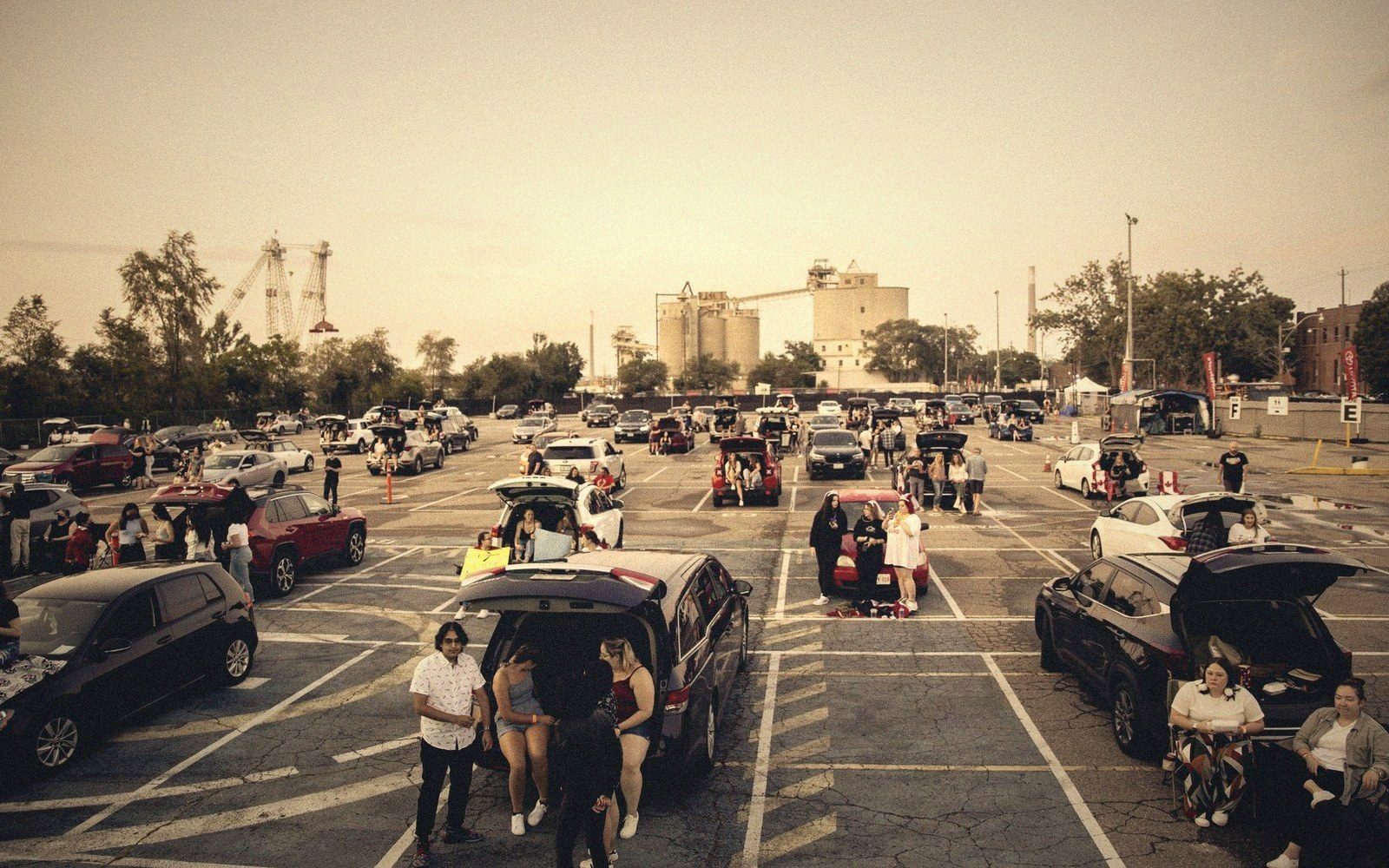
Nobody hands you a rulebook when you pull into a college football parking lot. The space is yours by arrival order, by convention, and — implicitly — by a set of expectations you are assumed to already understand. Chief among them: you leave the ground the way you found it.
That means bagging your trash before you walk to the stadium, and finishing the job before you drive out. Bottles, cans, paper plates, soaked napkins, the spent foil from the grill — all of it goes. Charcoal ash belongs in a metal container, sealed, not scattered across asphalt. Grease that hit the ground gets blotted, not ignored. The space is not yours to leave; it is yours to return.
What makes this work is not signage or security. It is visibility. A parking lot full of tailgaters is a neighborhood for a day, dense and watchful, and the social cost of leaving a heap of garbage is immediate and personal. The group packing down around you will see it. They will remember it the following season. In a culture built on return visits — same lot, same neighbors, same Saturday rhythm, year after year — reputation has a surprisingly long half-life.
How the Standard Gets Held
The enforcement mechanism is mostly nonverbal. A long look. A slow glance at someone's abandoned pile, then back at the person responsible. Occasionally a word, delivered in the flat register that communicates disappointment without escalating it. That tone is more effective than anger precisely because it is calm — it signals that this is a norm, not a dispute.
Experienced groups absorb new members into the expectation without announcement. The person handing out trash bags at the start of pack-down is demonstrating the standard, not explaining it. First-timers tend to fall in line not because they were told to but because everyone around them is doing it and the behavior is obvious.
The social mechanics
- The enforcement tool visible to neighbors, same-lot repeat season-to-season, the long look
- Why calm disappointment outperforms anger as a corrective
- New members absorbing the norm by watching, not being told
The rare group that leaves a mess is noticed, named and — in the tight social geography of a regular lot section — not quickly forgotten.
What the Space Owes Back
This is not a purely one-sided obligation. The lots that run well are the ones where facilities — trash cans, dumpsters, recycling bins — are positioned to make compliance easy. When the nearest bin is a quarter-mile away, the standard gets harder to hold. The infrastructure and the culture work together: each one props the other up. Where one fails, the other frays.
Leaving a clean space is, in the end, a claim about who you are and whether you intend to be back. Most people intend to be back.