The Last Hour
The pack-down happens under the worst possible conditions. Everything you did at setup either saves you now or punishes you.
You Made This Decision at Nine in the Morning
The lot empties faster than it fills. Kick-off funnels thousands of people toward the stadium over several hours; the final whistle releases them all at once, and within twenty minutes the lots are moving — engines, exhaust, horns, and the low-grade chaos of people trying to reverse out of spaces they pulled into in daylight. Whatever the scoreboard says, you are now operating on a deadline not of your choosing.
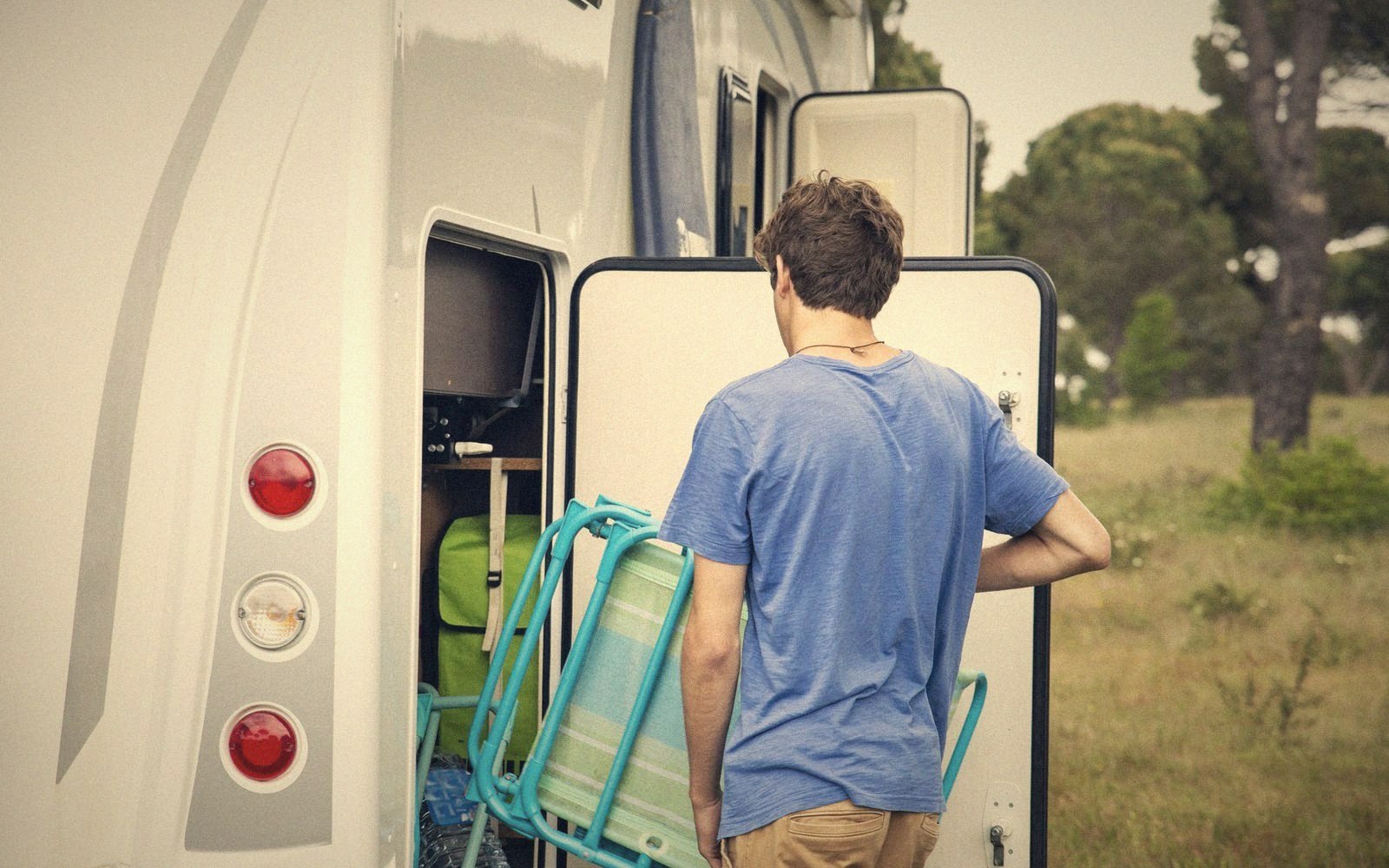
This is the argument for reversing into your spot when you arrive. It takes an extra thirty seconds at setup. It saves you several minutes — and a great deal of stress — when three hundred vehicles in the same row all want to leave simultaneously. The people who pull forward into a space spend the last hour maneuvering in a crowd that has no patience left for maneuvering.
The same logic applies to everything you packed in. The setups that break down fastest are the ones where every item traveled with a clear packing logic: the canopy lived in the bag it came from, the table folded the same direction it always does, the coolers went back in the truck first because they anchor everything else. Setups that improvised in the morning improvise again now, at dusk, when people are tired and the lot is loud and nobody can find the bag the stakes went into.
The Sequence That Works
Start before the game ends. Not in the third quarter — but the final five minutes of a close game are not when you want to be sourcing lids for containers. If the score is settled, begin closing down non-essentials while you can still see clearly and think clearly. Flatten what can be flattened. Bag what should be bagged. Set aside anything that needs a decision — what's going in the trash, what comes home — so that decision is already made when you need to move fast.
The grill is the constraint. It is the last thing on and, typically, the last thing safely packable: coals hold heat long after they look dead, and a gas burner that feels cool at the valve can still burn a tarp. Cold food decisions get made at this point too — anything that's been sitting at ambient temperature for two-plus hours goes into the bin, not the cooler. The rule is not negotiable, and it's worth making once rather than re-litigating it with tired people.
The setup-to-pack-down connection
- Reversing in at arrival saves minutes at departure, eliminates maneuvering in a packed lot
- Consistent packing logic items stored the same way every week break down faster
- Grill as the final constraint heat persists; it dictates the whole pack sequence
Ice is mostly gone by now, which actually helps: the coolers are lighter, easier to lift, and easier to load. What's left of the contents has made its own cold claim all day; pack it last and it stays cold long enough to get home.
The canopy comes down in the right order — remove the weights or stakes first, lower it before pulling the frame, fold it with the same person who folds it every time if you can manage it. A canopy folded by committee takes twice as long and fits half as well, and you'll be trying to stuff it into a bag with one hand while someone asks you where they parked.
Visible Standards
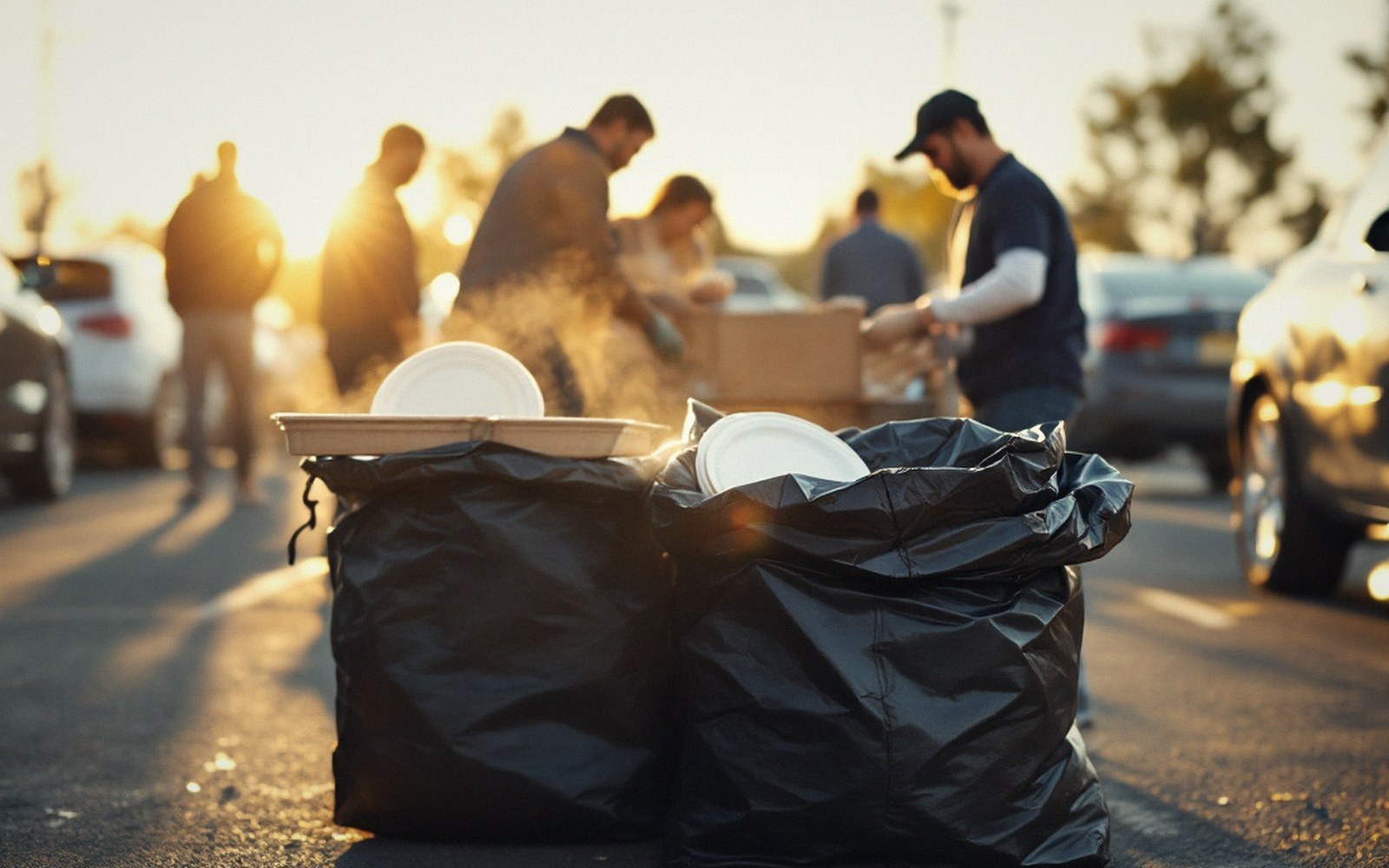
How you leave the space is watched. Not by an authority — by everyone else still breaking down around you. The unwritten code in a functioning lot is that you take everything out that you brought in, and you do not leave the adjacent spaces worse than you found them. Bags of trash go in the bins at the lot's edge, not shoved into the space between your bumper and the next vehicle. Cardboard gets broken down flat.
This matters in a practical sense too: the lots that maintain their character — the ones worth arriving at early, the ones where spaces get shared and tips exchanged — do so because this standard is genuinely enforced, socially, from within. The group that leaves a wreck makes itself unwelcome, and the lots have long memories. Six Saturdays a year, the same people are in the same sections. They notice.
Sequence guide
- Begin closing non-essentials before the final whistle
- Flatten, bag, sort trash vs. take-home while the lot is still calm
- Grill last: coals deceive; gas valves feel cool before they are
- Food safety cut-off applied here — anything warm too long goes in the bin
- Canopy: stakes and weights first, lower before pulling frame, one designated folder
- Coolers lighter by now — load them last; they still hold cold
Pack well, leave clean, and the road out is just traffic — which is all it should be.