Shade at noon
A canopy pitched at nine in the morning is not doing the same job it will be doing at one.
The sun is not static
Most people set up a canopy once and walk away from the decision. They anchor the legs, weight the corners, and treat the problem as solved. It is not solved — it is solved for the moment of arrival. The sun continues to move, and a canopy that shelters a folding table at nine in the morning may be sheltering empty asphalt by noon.
The geometry is simple but easy to underestimate. In autumn, which is when most college football falls, the sun at mid-morning sits relatively low and to the southeast. By early afternoon it is higher and to the south, and the shadow cast by a ten-by-ten canopy migrates accordingly — north and shorter as the day progresses. The comfortable strip of shade that covered your entire serving table at setup may have retreated to a narrow band down one edge by the time your guests are standing in line for lunch. This is not bad luck. It is predictable, and a few minutes of attention at arrival can prevent it.
The fix is orientation. Before you anchor anything, stand at the spot you are claiming and watch where the light is coming from. Then think forward three or four hours. In most continental American latitudes on a late-September or October Saturday, the most useful shade at noon runs north from the canopy's south edge. If you orient your table along that north axis and place guests along its long side under the canopy, the canopy works longer into the day. If you set up with the table running east-west, you lose coverage fastest, because the shrinking shadow retreats along the long axis rather than sheltering it.
The table inside the canopy
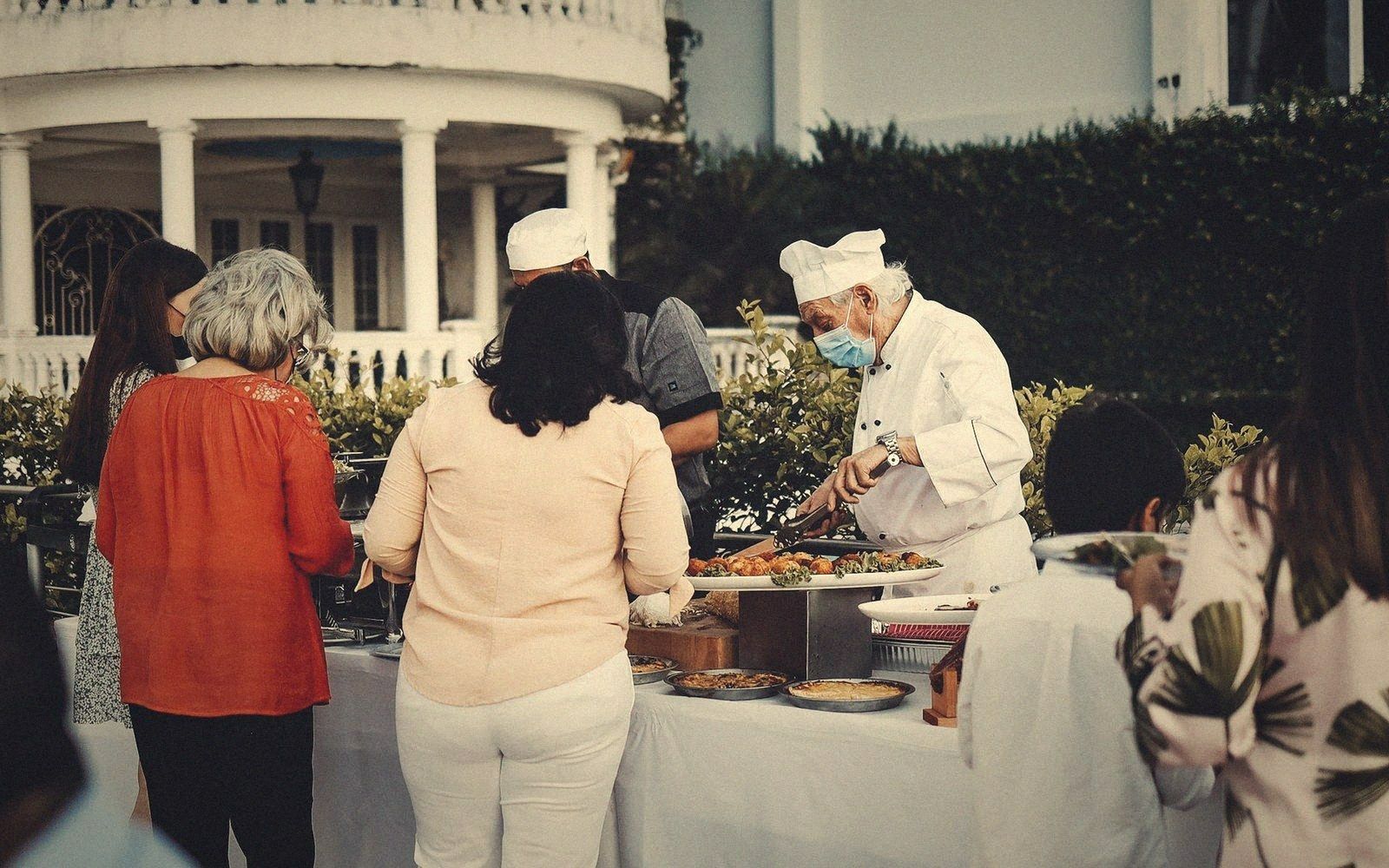
There is a secondary mistake that compounds the first: centering the table under the canopy. This feels tidy and logical. It is also wrong. A table centered underneath a ten-foot canopy leaves roughly five feet of clearance on each side, which means guests standing at the table — which is most people, most of the time — are standing outside the footprint. They are in full sun while reaching for food.
Push the table, running north to south, to one side edge of the canopy. Now the open floor under the canopy is where the people stand, the shade drifting north still covers them along the table's length, and the canopy's edge overhangs the table itself, blocking direct overhead glare. This means someone serving from the long side of the table is standing in the shade, and serving from one long side is already the right practice for managing a queue without a scrum — so the geometry aligns. The slight asymmetry looks odd for about ten minutes and then nobody notices.
Shadow geometry
- East-west table orientation loses coverage fastest as the sun tracks south; avoid
- North-south table orientation shadow retreats along the short axis; coverage holds longer into the afternoon
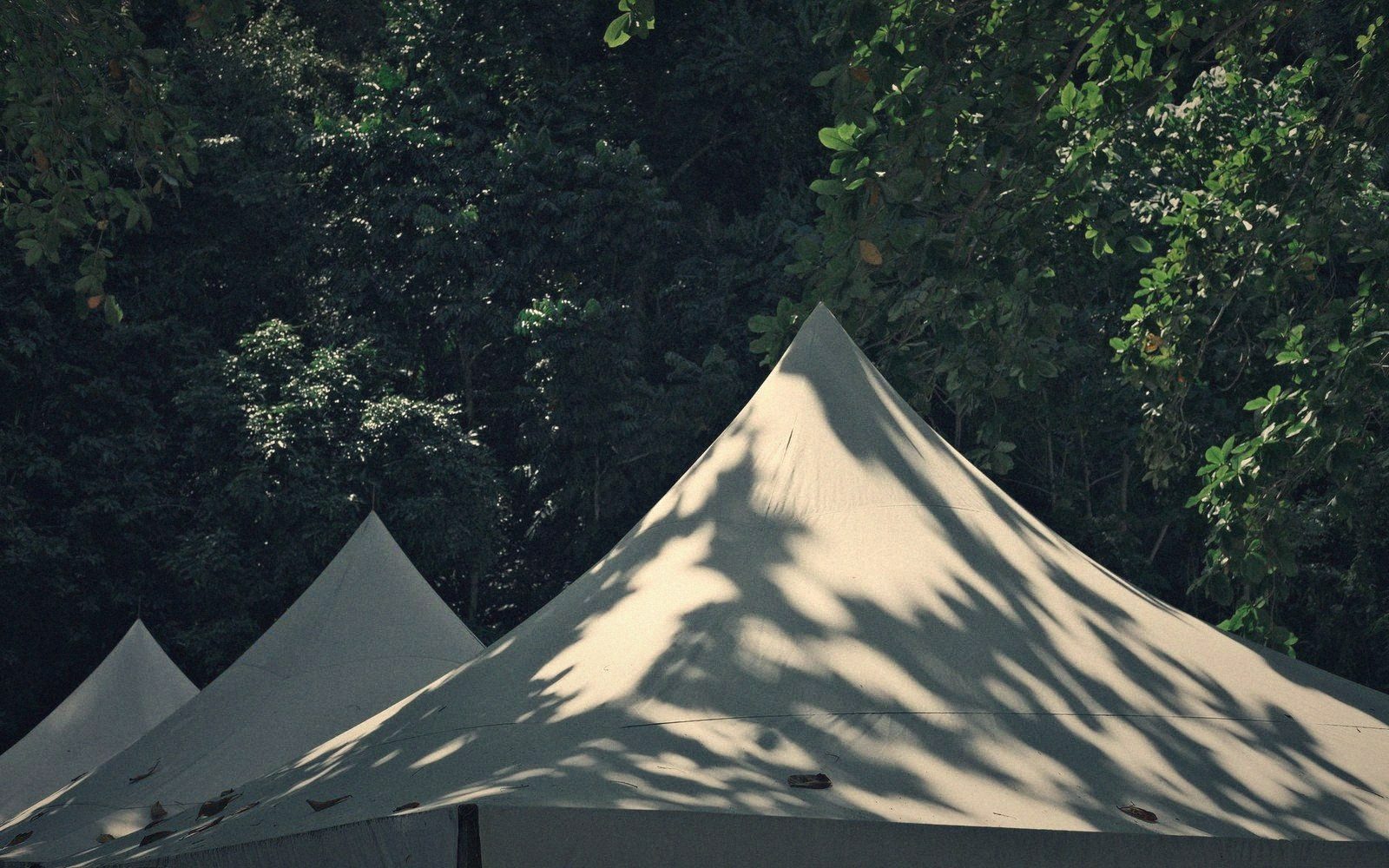
The third factor is the canopy's height. Most adjustable frames have two or three height settings. At maximum height you get better airflow and a more useful shadow angle — the canopy tilts less of its shade back over itself. Low settings feel sturdier in wind, but they eat into your effective coverage. If you are in an exposed lot where gusts are a concern, weight the legs rather than drop the height, and you keep the coverage you came for.
Working with what you cannot control
Not every lot is a clean flat expanse. There are permanent structures — stadium walls, light towers, other people's trucks and trailers — that cast their own shadows at angles that shift through the day. In a dense lot, a neighbor's SUV can block morning sun and then pull out at eleven, suddenly exposing everything you laid out in its shade. Concrete structures go the other way: a stadium ramp may be useless cover at ten but cut hard across your space in the early afternoon. These variables are worth reading when you arrive, not after you have staked everything down.
The practical discipline is to arrive with the canopy as the last thing you build, not the first. Park the vehicle, get the grill positioned downwind from the group, and place the coolers and the cooking station first. Those are fixed by function, not by sun angle. Then observe where the shadow lines fall, think about where they will fall in three hours, and place the canopy where it will do the most work at the moment people most need it — not at the moment you most want to stop thinking about it.
Also worth knowing
- Table pushed to one side edge of canopy, running north-south — puts guests in shade rather than surrounding empty ground
- Canopy at maximum height — improves shadow angle and airflow; use ballast weights instead of lowering the frame in wind