The Marching Band
They are not background music. They are the crowd's engine — setting tempo, cueing chants and filling every gap the game leaves open.
On the Field and Off It
A college marching band is not a pep band scaled up. It is a precision unit — anywhere from eighty to three hundred musicians who rehearse for more hours each week than most club sports, under a director who thinks in terms of drill charts, step counts and sound columns rather than set lists. The scale is part of the point. A hundred brass instruments aimed at an end zone produce a pressure wave that spectators feel in their chests, and that physical insistence is exactly what the band is there for.
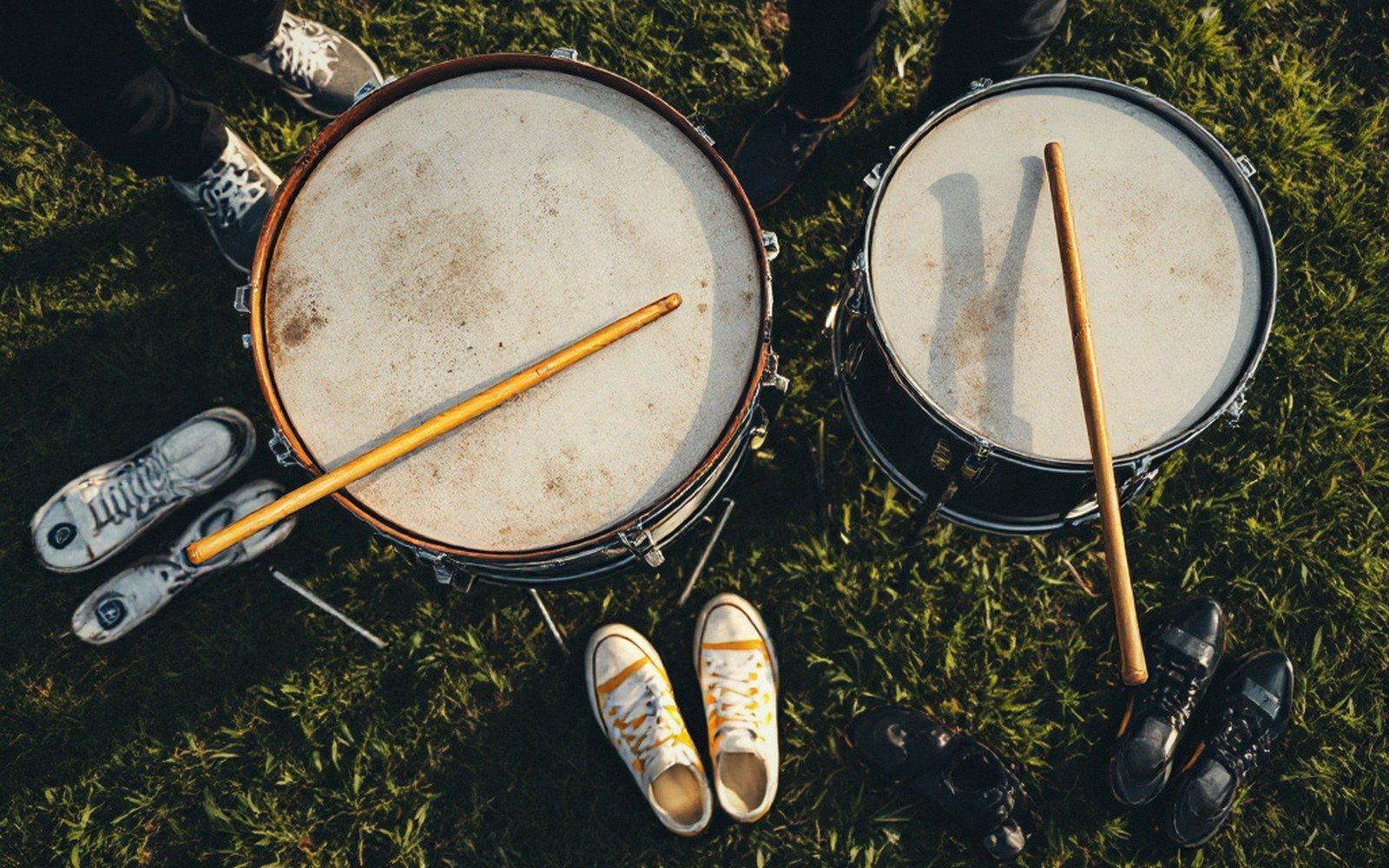
The mechanics start with the drum major — or a corps of them — whose job is to be readable from the top row of an upper deck: baton arc, stance, every cue made large enough to translate across distance. Behind that comes the percussion battery, which is worth understanding separately from the pit instruments at the sideline. The battery — snare drums, tenors, bass drums — functions as the rhythmic skeleton the brass lock onto. When a section of the crowd has lost the beat, it is the battery that pulls them back. This is not metaphor. Experienced band members talk about "locking in" a student section the way a session drummer talks about settling a recording take.
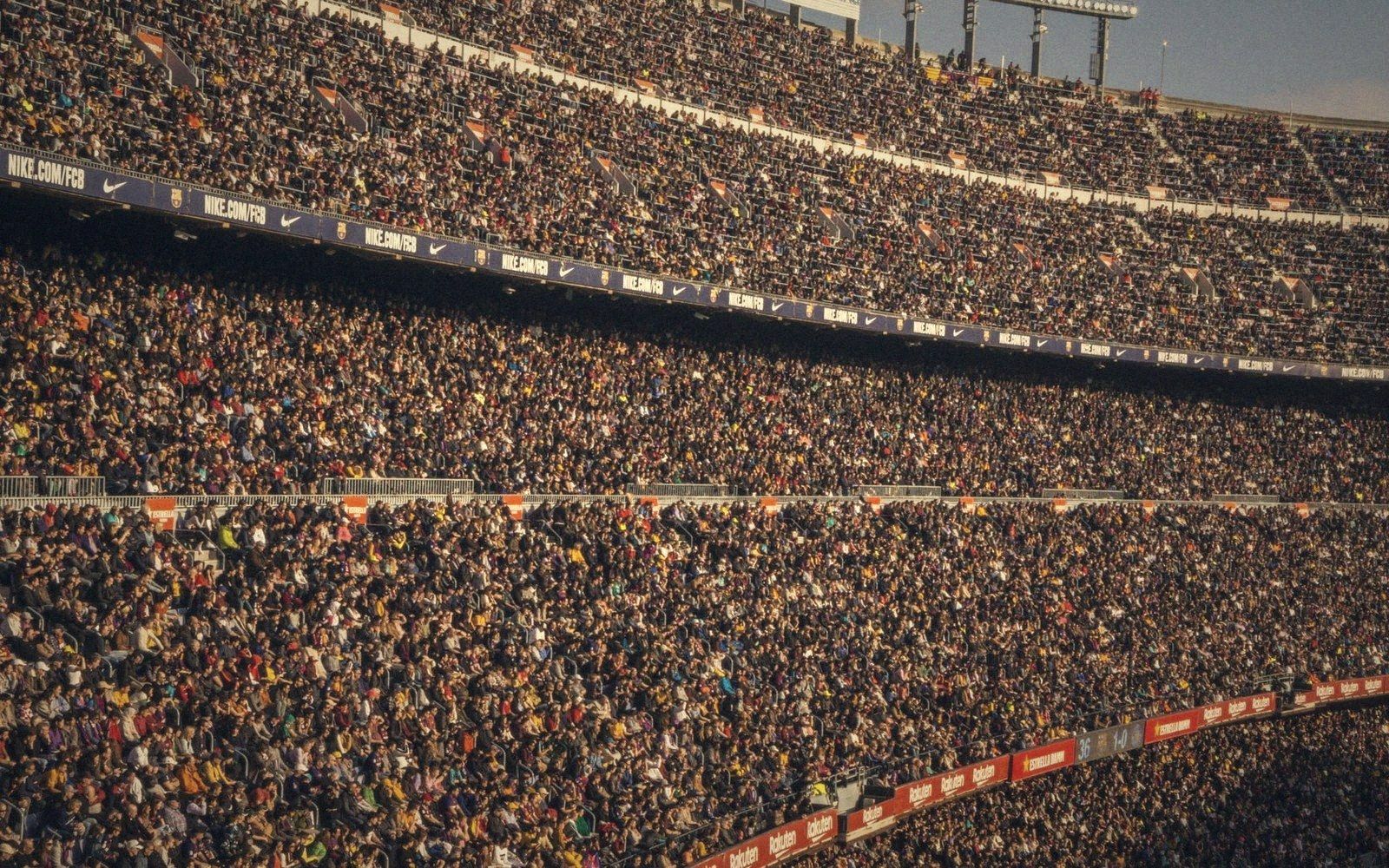
The music itself is chosen for two conflicting purposes. Shows — halftime performances — reward complexity and arrangement: original composition, intricate drill, transitions that read as shapes from the stands. But game music operates on a different logic entirely. It must be learnable by a crowd in real time, triggerable within seconds and robust enough to survive being shouted back by sixty thousand people who do not know the key. That is why the riff catalogue of any active band skews toward repeated short phrases — four bars, eight bars, a horn line that lands on a single emphatic note the crowd can punctuate. The band is not playing for the crowd; it is playing with the crowd, and the arrangement is written to leave that room.
The Drill That Makes It Work
What separates a marching band from musicians who happen to be moving is the rehearsal architecture behind it. Pre-season camps run for days before a single class meets. Weekly rehearsals through the season — full ensemble on a practice field, full uniform for run-throughs — consume an amount of time that surprises people who thought this was an extracurricular afterthought. It is not. The drill charts that govern movement are plotted positions for every performer on every count of every phrase, and learning them is memory work done on your feet, at tempo, while reading dot-to-dot position sheets and tracking four or five other bodies simultaneously.
The halftime show is the visible product of all this, and it earns its reputation. Bands that have been performing for generations carry show traditions — certain formations, certain pieces — that the alumni recognise and the freshmen inherit. What a visitor sees as entertainment is, from inside the band's perspective, a technical exercise completed at performance standard on a surface they have had limited time to mark. The field is shared with a football team, and the band gets it late, gets it briefly and still has to hit every dot.
What the band is actually doing
- Drum major the baton-wielding conductor, scaled for stadium-width visibility; may be one person or a corps of two or three
- Battery the marching percussion section (snares, tenors, bass drums); rhythmic anchor for the whole ensemble
- Pit mallet instruments, keyboards and other non-marching percussion stationed at the sideline
- Drill chart a position-by-position score for movement; every player has a "dot" on every beat
- Dot the specific field position assigned to a performer at a given moment in a drill sequence
Between the Whistles
The work that most of the crowd never consciously notices is what happens between plays. Every timeout, every injury stoppage, every review that stretches into minutes — the band fills it, and the decision about what to fill it with is made in real time by the director or a section leader reading the temperature of the stands. A crowd that is edgy after a fumble needs something different from a crowd that is loose and loud after a score. Getting that read right is part of the job, and bands that do it well are the ones you remember long after you have forgotten the score.
What this produces, over a four-hour game, is something closer to co-authorship than accompaniment. The student section and the band are in explicit conversation — call and response, tempo, volume — and the rest of the stadium takes cues from that conversation without always knowing it. The band is why the noise has shape. Without it, a crowd is just loud. With it, the noise has direction.

The two-mode problem
- Show music — halftime: complex, arranged for spectacle, practised for weeks
- Game music — between plays: short, repeatable, crowd-joinable in seconds; chosen to hold 60,000 people together
- Real-time read — the director or section leader choosing what to play based on crowd mood, with no script