Call and response
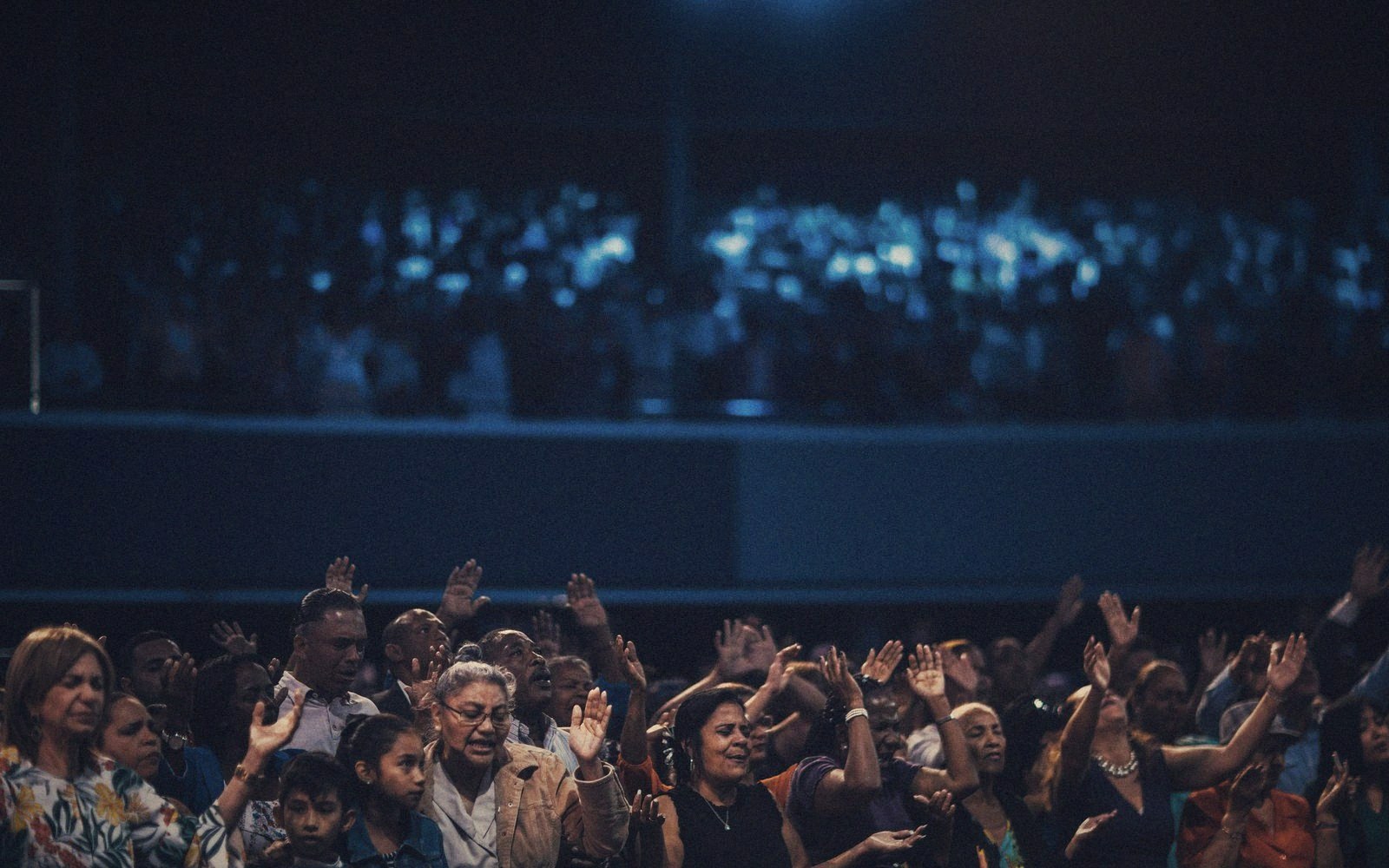
A crowd that teaches itself in real time
The simplest thing a stadium can do — collectively — is answer. Not together, not in unison, but in sequence: one side calls, the other responds, and the whole building becomes a single instrument with two moving parts. It sounds harder to organise than it is. In practice, a well-designed call-and-response chant spreads through a crowd of eighty thousand the way a key change spreads through a room: people feel the pattern before they consciously hear it, and they're in before they've decided to join.
That near-automatic uptake is the whole point. A chant that requires rehearsal, or that carries any lyric a first-timer might not know, is structurally broken. It cannot recruit. Good call-and-response material works on a set of principles that look simple precisely because someone, at some point, worked them out the hard way.
Why the structure does the teaching
The call is short — one phrase, rarely more than six syllables — and it ends on a rhythmic cue that is unambiguous. The crowd doesn't need to be told it's their turn; the silence after the call tells them. The response is even shorter, sometimes a single word or a clap pattern. Repetition does the rest. By the third cycle, sections that were silent on the first are in. By the fifth, the whole bowl is locked.
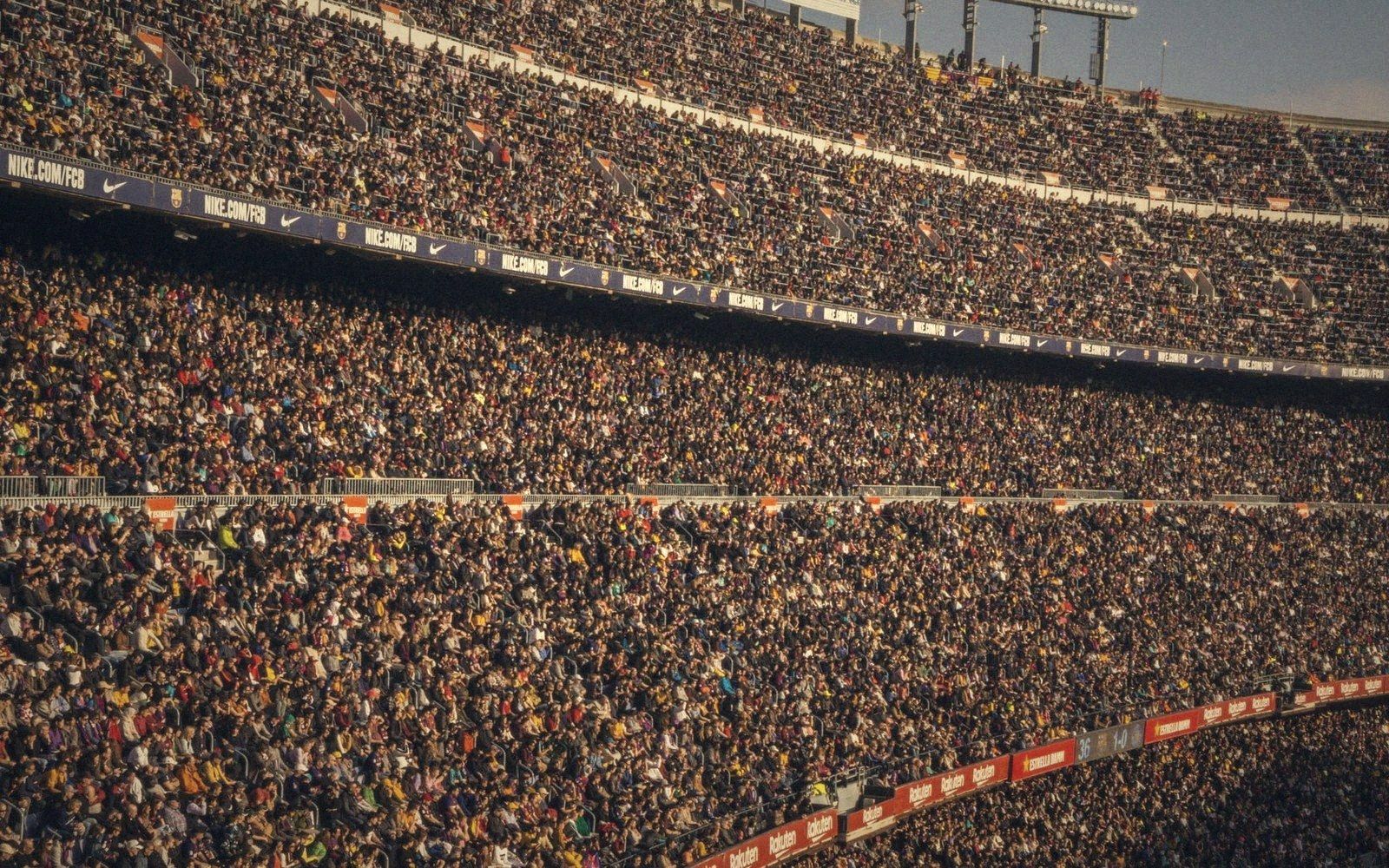
What makes stadiums acoustically useful here is their bowl shape. Sound from the student section reaches the far end of the upper deck slightly later than it reaches the fifty-yard line, but the delay at most venues is small enough that the crowd perceives it as volume rather than echo. The response arrives as a wave rather than a wall, which actually reinforces the sense that something is building. Physical architecture becomes social architecture.
How a chant spreads — a sequence worth visualising
- Cycle 1: call goes out; only the section nearest the source responds
- Cycle 3: adjacent sections have caught the rhythm; gaps filling
- Cycle 5: the full bowl is in; call and response are locked
The divide between the two halves doesn't have to be geographic. It can be section versus section, lower deck versus upper, student end versus alumni end. Some of the most effective versions run diagonally across the bowl, which sounds chaotic in theory but works because the call-and-response rhythm is so rigid that people find their part from context alone. If the people around you are calling, you respond. The chant tells you what to do.
What survives and what doesn't
Most chants that endure are old, and they're old for the same reason folk songs are old: the weak versions were forgotten and only the robust ones propagated. A chant that is too clever doesn't spread. A call that is too long gets slurred. A response that needs a particular regional reference won't travel. The ones that last tend to be phonetically blunt — hard consonants, open vowels — and rhythmically obvious, sitting on a meter the body already knows. A four-four pulse, roughly. Something you could clap without thinking.
The student section is typically where new material gets road-tested, which is why student sections tend to sit together in the first place. Density and repetition are the conditions for a chant to stabilise. If it works there, it spreads upward and outward into the seated tiers through pure contagion. If it dies in the student section, it dies entirely. There is no other incubator.

What doesn't survive is anything that needs to be explained. The moment you hear someone lean to their neighbour and ask what comes next, the timing has already broken. A broken chant is worse than silence — it marks the crowd as uncoordinated, which is its own kind of deflation. The best versions require no explanation, because the call literally contains the instruction. You hear what was said, you answer it, and the game continues.
That's why a stadium that is doing this well feels less like a crowd performing and more like a crowd conversing. The noise has direction and shape. It has a beat. And when it lands — when both halves answer each other cleanly across eighty thousand people — the effect is not something you hear so much as something you feel in your chest.
The structural rules
- Call: short (≤ 6 syllables), ends on an unambiguous rhythmic cue
- Response: shorter still — one word or one clap pattern is optimal
- Meter: four-four, something the body already knows without counting
- No regional references, no lyrics requiring prior knowledge