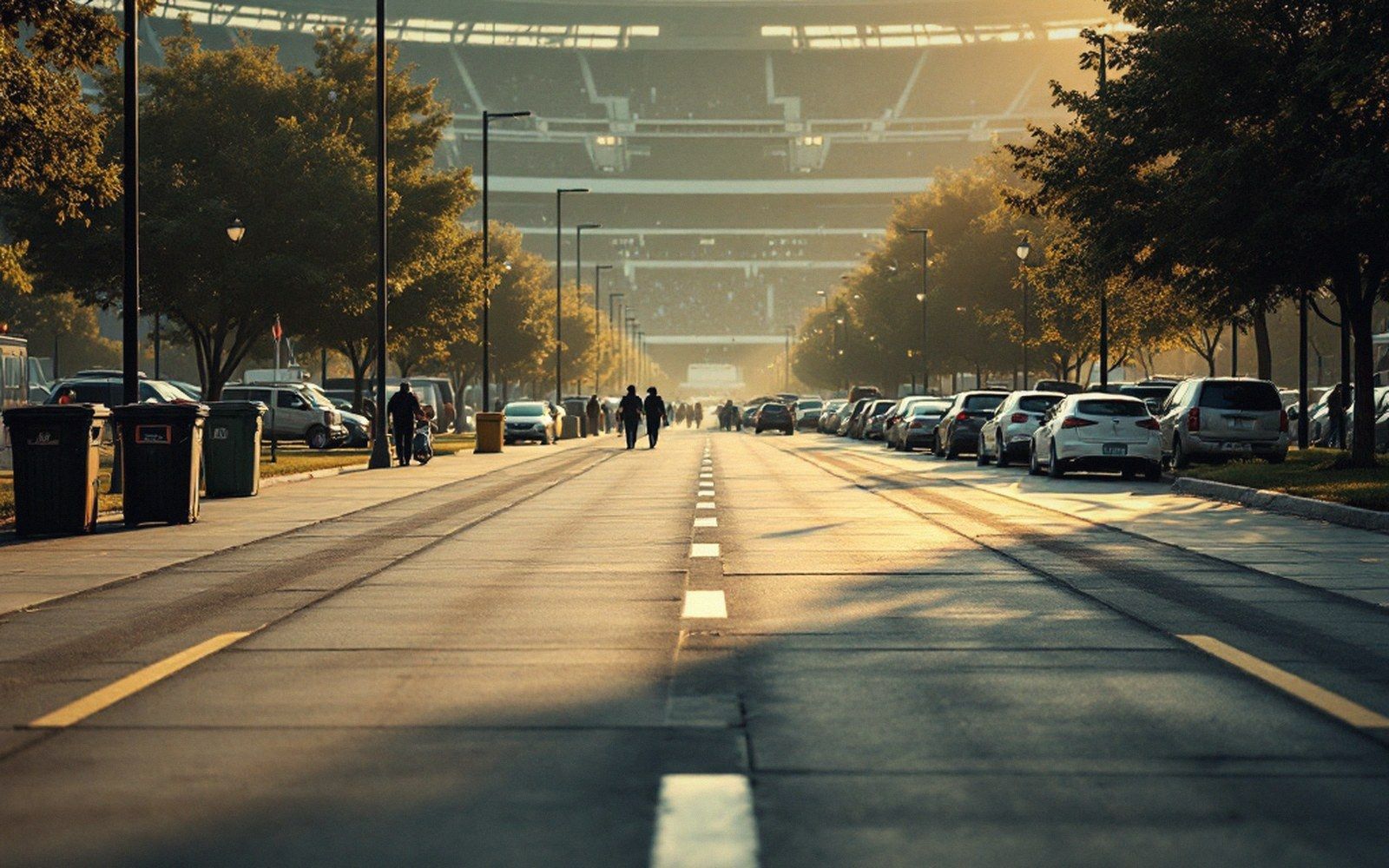
The Approach
Thousands of people leave the lots at different moments and arrive at the gates as one mass. The walk is brief; what happens on it is not.
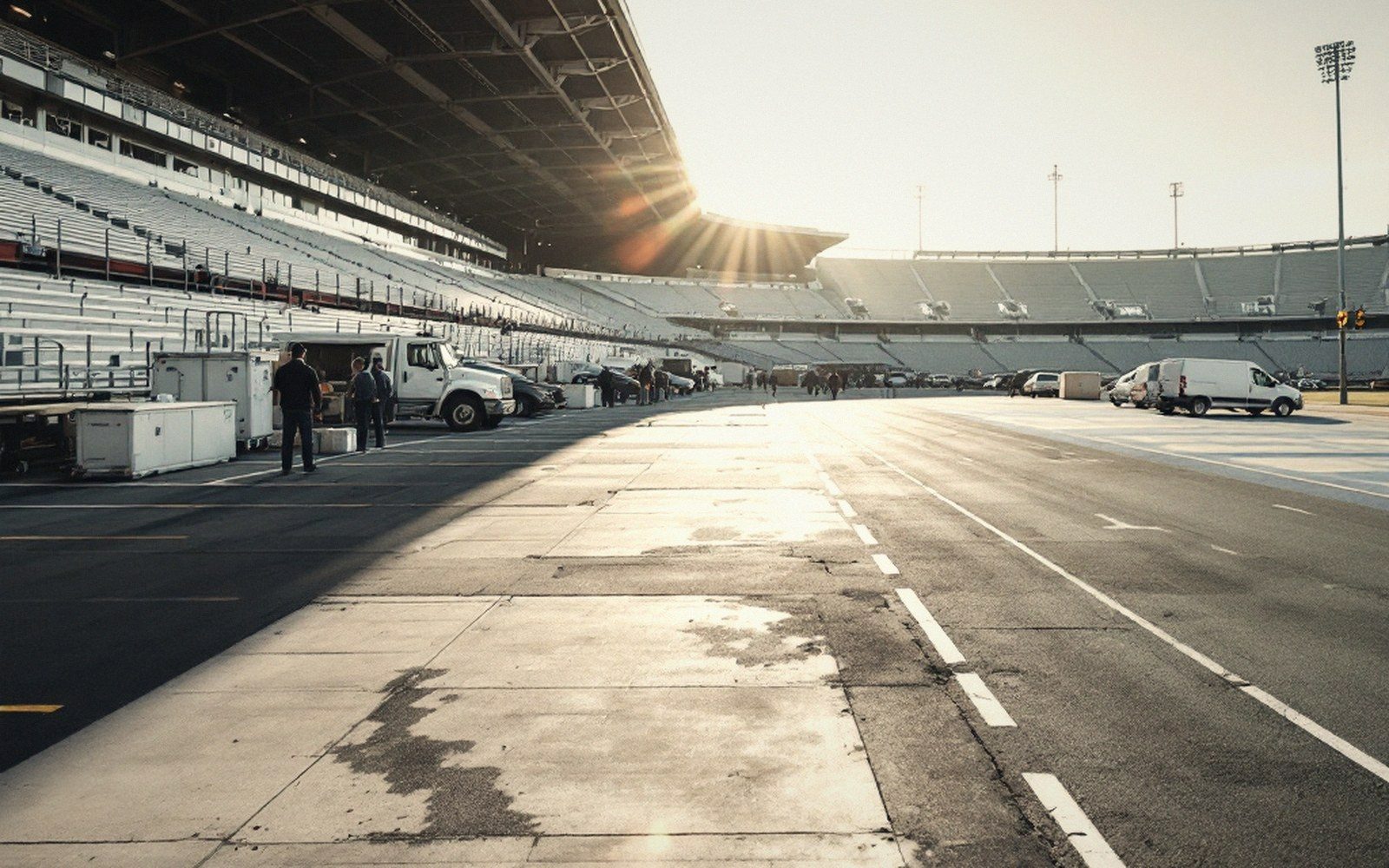
The procession that assembles itself
Nobody coordinates the walk to the stadium. There is no signal, no announcement, no marshal with a flag. And yet, reliably, a crowd forms — dense at the edges of the lots, thicker at the road crossings, a solid column by the time the gates come into view. The procession assembles itself from thousands of private decisions about when to leave the canopy, tip the last drink, and start moving.
The walk is usually short. Most tailgate lots sit within a quarter-mile of the gates, some closer. What stretches it is the mass of people moving in the same direction at the same time, compressing at every bottleneck — a crosswalk, a fence gap, a bridge — and spreading again on the other side. Seasoned tailgaters read this and time their departure accordingly: leave too early and you stand in a queue; leave too late and you're running.
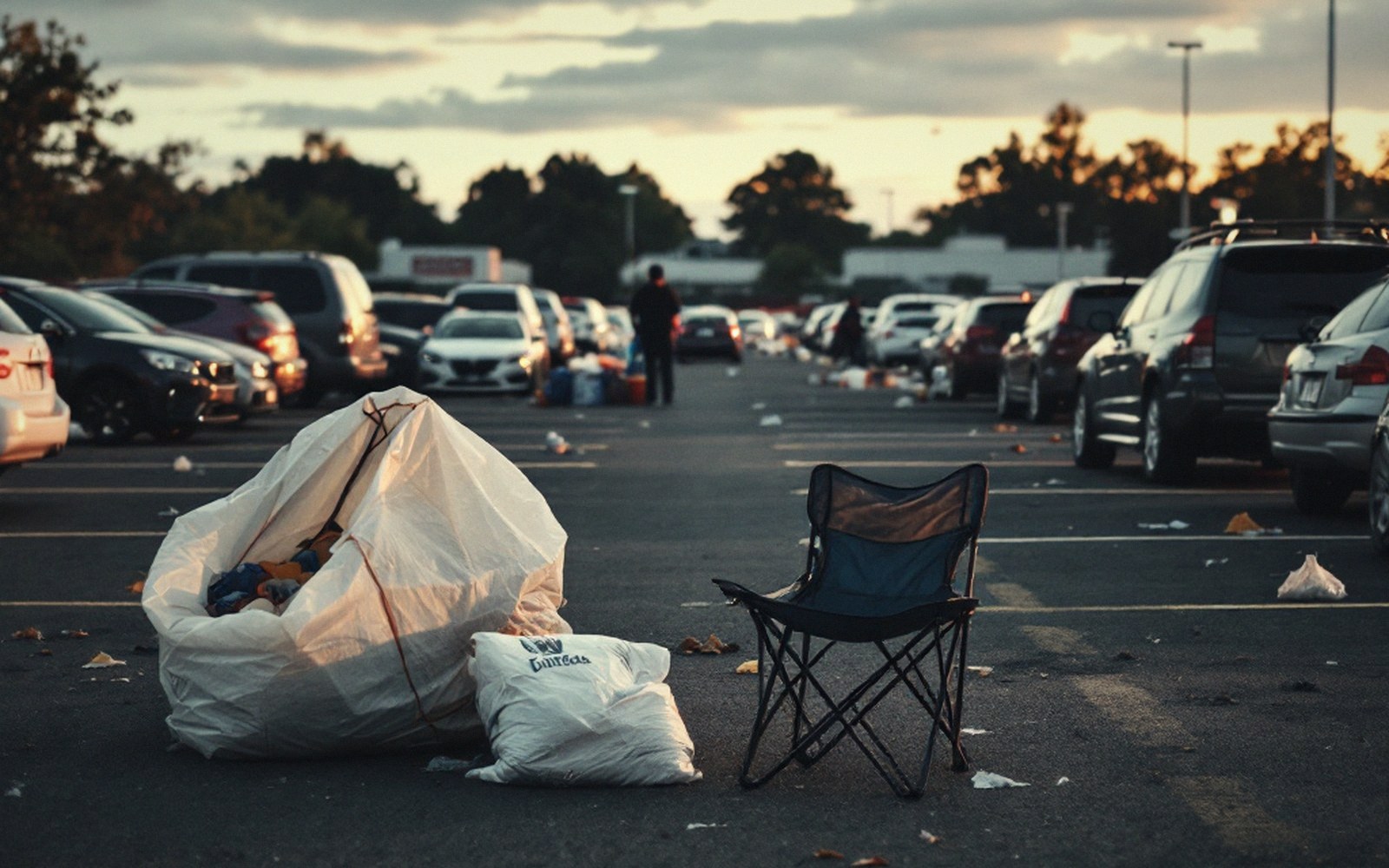
The character of the walk changes as you get closer. Out in the lots it is relaxed, almost domestic — people carrying jackets, arguing cheerfully, looking for where they put the tickets. Closer to the gates the energy sharpens. The sound of the marching band carries out through the concrete, and if the band is already on the field you can feel the bass drum before you hear it clearly. This is the mechanism. The crowd outside absorbs the sound from inside, and its mood shifts.
The final hundred yards compress everyone into a funnel, which is where strangers become temporary neighbours — nodding, shuffling, making brief remarks about the weather or the opposing team. It is one of the few moments in a tailgate day when the bubble of your own group genuinely presses against everybody else's. By the time you reach the gate and your ticket is scanned, the separate walk is over. You are inside the event now, not beside it — and the lot, the grill, the folding table, all of it exists only in the past tense.
What the walk does to a crowd
- Compression point a bottleneck (crosswalk, fence gap) where separate streams merge into one column
- Timing the departure leave early: queue; leave late: run; the calculus most regulars know by feel
- Sound as signal the marching band audible outside the stadium shifts the crowd's mood before the gates open